

8 Foods That Calm an Overactive Nervous System (And Why They Actually Work)
By McKenzy | Reading Time: 8 minutes

You've probably been told to "just eat healthy." And you're probably rolling your eyes at that, because you've been eating healthy, or trying to, and your nervous system still feels like it's running a marathon at 2 a.m. for no apparent reason.
Eating for a calm nervous system is not the same as eating "clean." It's mineral-focused. And it matters a lot more than most people realize, especially if your body is sensitive, reactive, or stuck in a stress loop that won't quit.
The nervous system runs on electricity. And that electrical activity, every nerve signal, every neurotransmitter message, every shift from "on" to "off", is regulated by minerals. Specifically magnesium, potassium, and zinc. When these are low, the system becomes hypersensitive, excitable, and hard to calm down. When they're adequate, the nervous system has what it needs to regulate itself.
You cannot regulate a nervous system that is nutritionally depleted, no matter how many breathwork videos you watch.
So let's talk about the eight foods that move the needle most, and exactly why each one works.
Why Minerals Matter More Than You Think for Nervous System Health
Before we get into the list, it's worth understanding the mechanism.
Magnesium is arguably the most important mineral for a calm nervous system. It supports GABA, your brain's primary inhibitory neurotransmitter, the one that essentially tells your nervous system to stand down. When magnesium is low, GABA activity drops, and the brain becomes harder to quiet. Research consistently links magnesium deficiency to anxiety, tension, poor sleep, and nervous system excitability. The problem is that chronic stress depletes magnesium, meaning the more stressed you are, the more you lose, and the harder it becomes to calm down. It's one of the more frustrating cycles in nervous system dysregulation.
Potassium regulates the electrical activity in nerve cells. Every time a nerve fires, potassium and sodium move across the cell membrane to create that electrical signal. Without adequate potassium, that signaling becomes erratic, which can show up as irritability, muscle tension, anxiety, and low mood. Studies have also linked higher dietary potassium intake to lower rates of depression.
Zinc plays a quieter but equally important role in brain signaling and neurotransmitter production. Low zinc has been consistently associated with increased anxiety and mood instability.
These three minerals are also among the most commonly depleted in women dealing with chronic stress, gut issues, sleep problems, and hormonal imbalance, which is exactly the population reading this. If that's you, How Gut Health Affects Sleep is worth reading alongside this post, because poor gut absorption can mean you're eating these foods and still not absorbing the minerals in them.
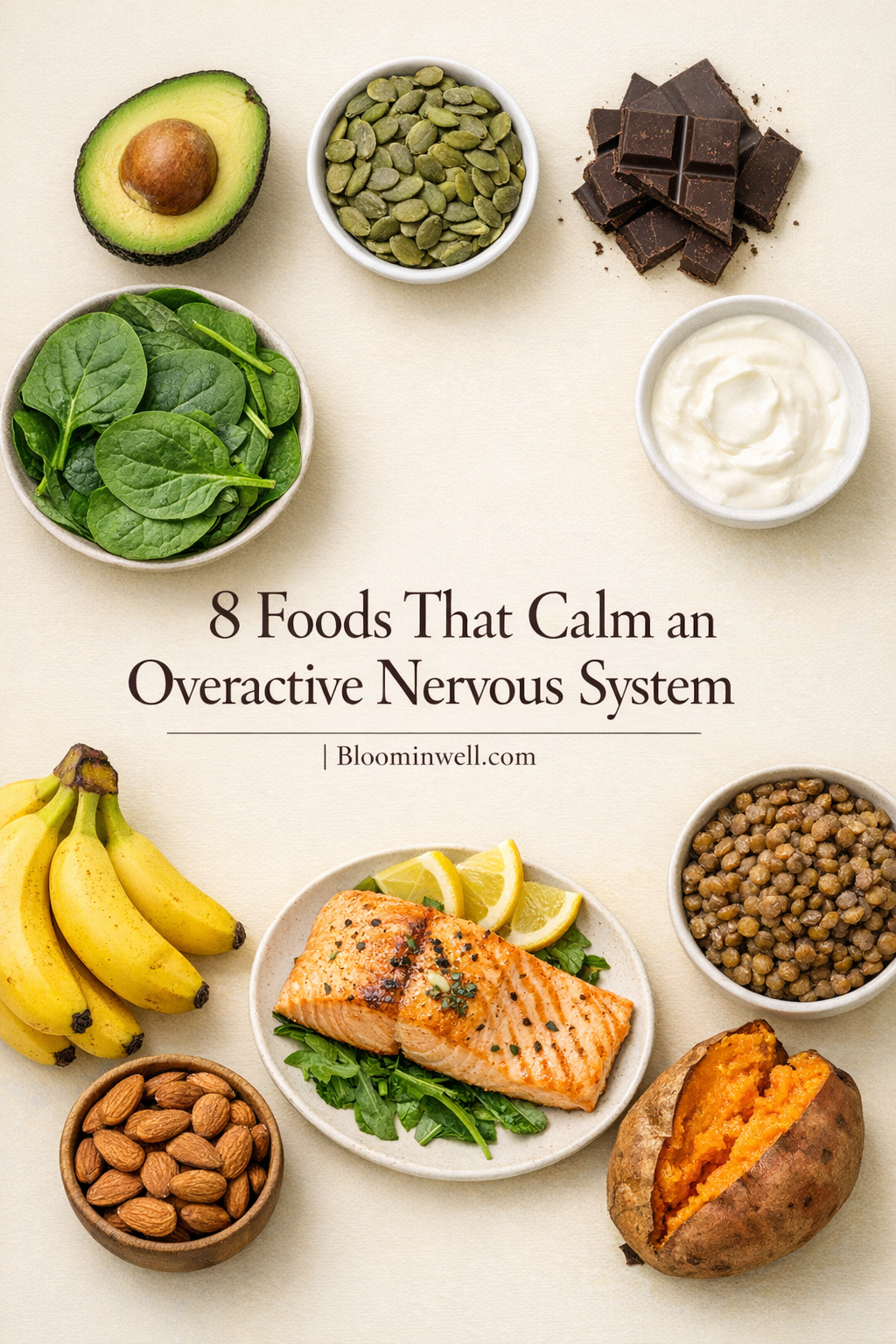
8 Foods That Calm an Overactive Nervous System
1. Dark Leafy Greens (Spinach, Swiss Chard)
If there is one category of food that earns the title "nature's off switch for an overactive brain," it's dark leafy greens. Spinach and Swiss chard are among the highest dietary sources of magnesium available, and they deliver it alongside folate, which supports healthy methylation and neurotransmitter production.
Magnesium directly supports GABA activity, and GABA is the signal your nervous system needs to shift from excitation into calm. For women whose nervous systems are running hot, consistently low magnesium is often part of the picture.
The goal isn't a single smoothie. It's consistent daily intake, two to three cups of cooked leafy greens, or a large raw handful in a smoothie, most days of the week. Cooking spinach significantly increases the amount you can absorb in a serving.
Add a large handful of spinach to scrambled eggs, blend it into a smoothie where you can't taste it, or wilt Swiss chard in olive oil and garlic as a side dish for dinner.
2. Pumpkin Seeds
Small but seriously mineral-dense, pumpkin seeds deliver both magnesium and zinc in a single snack-sized serving. A quarter cup provides roughly 40–50% of the daily magnesium target for women, alongside a meaningful amount of zinc, which supports neurotransmitter balance and has been studied for its role in reducing anxiety.
They're also one of the most practical additions to a nervous system nutrition plan because they require no preparation. Handful on top of a salad. Stirred into oatmeal. Eaten straight from the bag.
If you're also dealing with histamine issues alongside nervous system dysregulation, which is common, pumpkin seeds are low-histamine, making them a rare mineral-dense food that works for reactive bodies. More on eating for sensitive bodies in 8 Low Histamine Pantry Staples.
Keep raw, unsalted pumpkin seeds on the counter as a default snack. Aim for a quarter cup daily.
3. Avocado
Avocado earns its place here because of its potassium content, one medium avocado contains more potassium than a banana, combined with magnesium and healthy monounsaturated fats that support both brain function and inflammation regulation.
Potassium helps stabilize the electrical activity in nerve cells, reducing overstimulation and supporting a calmer baseline. The fat content also matters: the brain is approximately 60% fat, and adequate dietary fat is necessary for cell membrane integrity, neurotransmitter function, and the absorption of fat-soluble nutrients.
For women dealing with blood sugar dysregulation alongside nervous system issues, which is more common than most people realize, avocado's fat and fiber content also slows glucose absorption, helping prevent the cortisol surges that come with blood sugar crashes. That connection between blood sugar, cortisol, and anxiety is one of the most underappreciated pieces of nervous system support.
Half an avocado with eggs in the morning, sliced onto a salad at lunch, or mashed simply with lemon and sea salt as a side.
4. Bananas
Bananas bring two key nutrients to the nervous system: potassium for nerve signal regulation and vitamin B6 for serotonin production. B6 is a necessary cofactor in the synthesis of both serotonin and dopamine, meaning without adequate B6, your body literally cannot make the neurotransmitters it needs for mood stability and calm.
Potassium from whole food sources like bananas also supports proper nerve function and has been linked in research to lower risk of depression.
One note for sensitive bodies: ripe bananas are higher in sugar and may cause blood sugar fluctuations in some women. If that's you, pair a banana with a protein or fat source, almond butter, a boiled egg, or a handful of pumpkin seeds, to slow the glucose release and avoid a cortisol spike post-meal.
Banana with almond butter as a morning or afternoon snack. Frozen bananas blended into smoothies for sweetness without added sugar.
5. Almonds
Almonds are a magnesium-plus-fat combination that supports both the structural needs of the nervous system and its ability to downregulate stress. The healthy fats in almonds support cell membrane function and help buffer the inflammation that can make nervous system reactivity worse over time.
Magnesium deficiency is specifically associated with heightened anxiety response and muscular tension, two things that show up constantly in women with dysregulated nervous systems. Almonds offer a portable, practical way to increase magnesium intake without supplements.
(If you're already supplementing magnesium and want information on forms and standard dosing for sensitive bodies, I cover that in How Do I Get Enough Magnesium.)
A small handful, about 20–23 almonds, as a snack between meals, or almond butter stirred into oatmeal or smoothies.
6. Sweet Potatoes
Sweet potatoes work on the nervous system through a slightly different mechanism than the mineral-dense foods above: they stabilize blood sugar. And blood sugar stability is one of the most underrated tools for a calmer nervous system.
Here's why it matters: every time blood sugar drops significantly, the body releases cortisol to bring it back up. For a nervous system that's already dysregulated, that cortisol surge is one more threat signal, one more reason for the smoke alarm to go off. Sweet potatoes, with their combination of potassium, complex carbohydrates, and fiber, provide a slow, steady glucose release that prevents those cortisol spikes.
They also contain meaningful amounts of potassium and support the gut microbiome through their prebiotic fiber content, relevant because the gut produces a significant proportion of the body's serotonin. A well-fed gut is a calmer nervous system.
Roasted sweet potato as a carbohydrate source at dinner. Paired with protein and fat for the most stable blood sugar response.
7. Lentils
Lentils are a quiet workhorse for nervous system nutrition. They deliver magnesium, iron, and B vitamins, all nutrients involved in energy production, neurotransmitter synthesis, and reducing the fatigue-related stress that compounds nervous system dysregulation.
Iron deserves a specific mention here because low iron is extremely common in women and is directly linked to fatigue, brain fog, anxiety, and poor stress resilience. When the body is iron-depleted, it cannot produce adequate energy at the cellular level, and a nervous system running on depleted energy is a nervous system that struggles to regulate.
Lentils are also a good source of plant-based protein, which supports blood sugar stability and provides amino acids for neurotransmitter production.
Lentil soup, lentils added to a grain bowl, or a simple lentil and vegetable stew. Pairing with vitamin C (lemon juice, bell pepper, tomatoes) significantly increases iron absorption from plant sources.
8. Dark Chocolate (70%+)
Yes, this one is real, and no, it's not a loophole. Dark chocolate at 70% cacao or higher is a legitimate source of magnesium and contains compounds that have been studied for their ability to reduce cortisol levels and support a calmer stress response.
It also contains flavonoids, plant antioxidants that may help reduce neuroinflammation, which plays a role in mood dysregulation and nervous system reactivity. The key is quality and quantity: a square or two of high-quality dark chocolate is the goal, not half a bar of milk chocolate.
For women with histamine sensitivity, dark chocolate is worth approaching with some awareness, as it can be a histamine trigger for some people. If you suspect histamine is part of your picture, start with a small amount and observe.
One to two squares of 70%+ dark chocolate after a meal.
How to Actually Eat This Way (Without Overhauling Everything)
The goal isn't a perfect mineral-optimized meal plan starting Monday. For sensitive bodies especially, dramatic dietary changes can backfire, and the nervous system doesn't need another source of stress.
Instead, pick two or three foods from this list that feel genuinely easy and enjoyable to add. Spinach in your eggs in the morning. Pumpkin seeds as your afternoon snack. Sweet potato at dinner a few nights a week. That consistency over time is what actually moves the needle.
If you're also working on the rest of your nervous system regulation picture like sleep, stress response, gut health, gentle supplements, this morning routine for burnout recovery is a practical place to anchor daily habits.
And if eating feels complicated because your body reacts to foods unpredictably, that's worth addressing at the root. Top Natural Supplements for Anxiety is another low-barrier starting point, gentle, mineral-supporting, and easy on reactive bodies.
A Peek Into My Daily Routine
Here's what this actually looks like in my daily life, not as a protocol but as habits that stuck:
Spinach or Swiss chard in some form almost every day, usually in eggs or a smoothie
A small handful of raw pumpkin seeds in the afternoon instead of reaching for caffeine
Avocado with most breakfasts, the fat keeps me stable and focused through the morning
A square of dark chocolate most evenings, I stopped feeling guilty about it when I understood what it was actually doing
Lentil soup on rotation in the colder months, cheap, filling, and genuinely nourishing
Sweet potato instead of white potato most of the time, especially at dinner
Frequently Asked Questions
Q: What foods are best for calming an overactive nervous system? A: Foods highest in magnesium, potassium, and zinc have the most direct impact on nervous system calm. Dark leafy greens, pumpkin seeds, avocado, bananas, almonds, sweet potatoes, lentils, and dark chocolate are among the most effective, and practical choices. Consistency matters more than perfection.
Q: Does magnesium really help with nervous system anxiety? A: Research supports a consistent link between low magnesium and increased nervous system excitability, anxiety, and tension. Magnesium supports GABA, the brain's calming neurotransmitter, and helps the body shift out of stress response. Getting magnesium through food is a sustainable starting point; supplementation can be helpful for those with higher depletion.
Q: Can food really calm a dysregulated nervous system? A: Food is one piece of the picture, not the whole answer, but a meaningful one. A nervous system running on mineral depletion has a harder time regulating itself regardless of what else you do. Nutrition provides the raw materials the system needs to function. Pair it with nervous system regulation practices for the most impact.
Q: What should I eat when I'm feeling anxious or overstimulated? A: In an acute moment, something grounding and mineral-rich works best, a banana with almond butter, a small handful of pumpkin seeds, or a piece of dark chocolate with a glass of water. The goal is stable blood sugar and a small influx of magnesium or potassium, which supports the body's natural ability to downregulate.
Food is not going to single-handedly heal a dysregulated nervous system. But it is foundational in a way that's easy to underestimate, especially when you're already doing everything "right" and still feel wired, exhausted, reactive, and stuck.
The minerals in these eight foods are the raw materials your nervous system needs to do its job. They're not glamorous. They're not a protocol. They're just consistent, targeted nourishment, and that matters more than almost anything else when you're working to calm an overactive nervous system from the inside out.
I'd love to hear which of these you're already eating, and which surprised you. Leave a comment below.

About the Author
Dr. McKenzy is a Doctor of Chiropractic with functional lab testing training and the founder of Bloomin' Well, a holistic wellness company dedicated to helping women regulate their nervous systems, gut, and hormones gently and sustainably. After spending eight months bedridden, she rebuilt her own health from the ground up and now guides other sensitive women through the same journey. She blends clinical science with somatic practices and believes every woman deserves to feel well in her own body.