Why Supplements Make You Feel Worse (And How to Start Slowly If You Have a Sensitive Body)
By McKenzy | Reading Time: 9 minutes

You did everything "right." You researched the supplements, ordered the good brands, started your new protocol with hope, and then your body completely fell apart.
Maybe you got headaches. Maybe your gut revolted. Maybe you felt anxious, wired, exhausted, or somehow worse than before you started. And now you're left wondering: Is my body just broken? Am I too far gone to even heal?
If supplements make you feel worse, you are not alone, and you are absolutely not broken.
This is one of the most common experiences I hear from the women I work with, and honestly, it was my own experience too. When I was bedridden for eight months trying to piece my health back together, I tried supplement after supplement and kept reacting. I didn't understand why until I learned what was actually happening underneath the surface.
In this post, I'm going to explain exactly why sensitive bodies can react to supplements, what may be happening on a physiological level, and how to begin building a gentle foundation so your body can actually receive support, without the overwhelm.
What's Actually Happening in Your Body When Supplements Make You Feel Worse
Supplements are not neutral. They are biochemically active compounds. And if your nervous system is in a chronic stress state, your liver is sluggish, or your gut lining is compromised, even a ‘natural’ supplement can feel like too much.
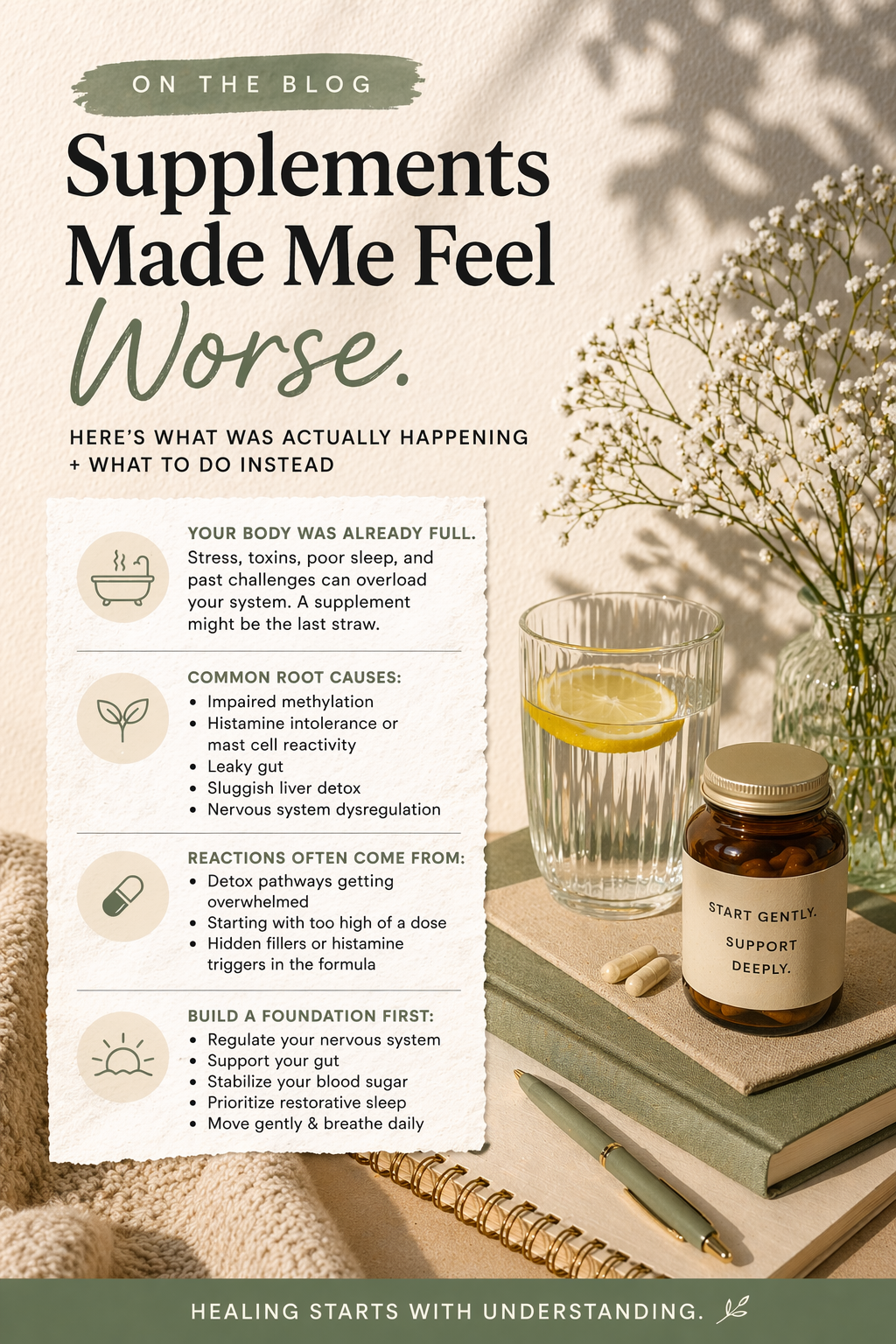
Think of your body like a bathtub. Over time, stress, toxins, infections, emotional trauma, and poor sleep have been slowly filling that tub. When you add a supplement, even a helpful one, it can tip the water right over the edge. Your body isn't reacting because the supplement is bad. It's reacting because the tub was already full.
This is especially true for women with nervous system dysregulation. When your body is stuck in a survival stress response, it interprets a lot of inputs, including supplements, as potential threats. Your histamine system may be overactive. Your liver's detox pathways may be sluggish or backed up. Your gut may not be absorbing properly. Any one of these can cause a negative reaction to things that are meant to help.
Common root causes of supplement sensitivity include:
Impaired methylation (how your body processes and clears compounds)
Leaky gut or intestinal permeability
Sluggish liver detox pathways
Chronic nervous system dysregulation (sympathetic overdrive)
Understanding this changes everything, because instead of fighting your body, you can begin working with it.
→ Learn more about why your nervous system keeps you stuck in survival mode
The Most Common Reasons Sensitive Bodies React to Supplements
Your Detox Pathways Are Overwhelmed
Many supplements, especially B vitamins, antioxidants, and liver-support herbs, actually activate your detox pathways. That sounds like a good thing, and it is eventually. But if your liver and lymphatic system are already sluggish, mobilizing toxins faster than your body can clear them creates a temporary flare of symptoms.
This is sometimes called a healing crisis or Herxheimer reaction, and while it can be a sign of progress, diving in too fast makes it brutal. Your body needs to be able to process what gets stirred up.
Signs this might be happening: headaches after starting supplements, increased brain fog, skin breakouts, or fatigue that gets worse before it gets better.
→ Read more about why you feel worse before you feel better when healing
You're Starting with Too High a Dose
Most supplement dosing recommendations are based on a "normal" healthy adult. If your system is sensitive, depleted, or reactive, even a fraction of a standard dose can feel like too much. Starting at full dose is like trying to run a marathon without ever having walked a mile.
Talk to your practitioner about: Starting at ¼ or even ⅛ of the suggested dose and increase very slowly, as in, over weeks, not days.
The Supplement Contains Hidden Fillers or Histamine Triggers
Not all supplements are created equal. Many contain fillers like magnesium stearate, titanium dioxide, artificial dyes, or high-dose B vitamins in synthetic forms that sensitive bodies struggle to tolerate. Others contain ingredients that are naturally high in histamine or histamine-liberating, things like vitamin C in high doses, fish oil, or fermented bases.
If you're reacting to seemingly random supplements, it may not be the active ingredient at all, it may be what's in the capsule.
How to Build a Foundation Before You Add Supplements
Before you add anything to your plate, your body needs a foundation that allows it to receive support. Think of it like tilling the soil before you plant seeds.
Nervous System Safety Comes First
If your nervous system is in a constant state of fight-or-flight, your body will continue to interpret inputs, including helpful ones, as threats. Nervous system regulation is the prerequisite, not the afterthought.
This means before adding supplements, focus on:
Consistent, restorative sleep
Blood sugar stability (eat protein with every meal)
Reducing stimulants that spike cortisol
Gentle movement rather than intense exercise
Daily nervous system practices like breathwork, humming, or grounding
→ Learn how to start a nervous system reset — this is where I always begin with new clients
There's a quiet faith perspective I hold here: healing is rarely about doing more. Sometimes the most profound act of trust is slowing down and letting God's design for your body actually do its work.
Support Your Gut Before Loading Up on Supplements
Your gut is how supplements get into your body. If the intestinal lining is inflamed or compromised, you may not be absorbing what you're taking, and you may actually be creating more reactivity by irritating an already-sensitive gut.
Simple gut-first steps to consider:
Prioritize warm, cooked, easy-to-digest foods
Reduce raw vegetables, cold foods, and high-histamine foods temporarily
Stay hydrated with filtered, mineralized water
Eat regular, consistent meals to support your gut's motility rhythm
→ Checkout low-histamine pantry stables for practical, simple options that won't overwhelm your system
→ Also read how stress, cortisol, and estrogen disrupt hormone balance and nervous system health, because these two are deeply connected
Where to Start If You Want to Try Supplements Again
If you want to try supplements again after reacting, here is the gentlest possible approach.
Start with One at a Time (and Keep a Symptom Journal)
Never start multiple supplements at once. If you react, you won't know which one caused it. Add one supplement, at a micro-dose, and track your response for 5–7 days before adding anything else.
Keeping a simple symptom tracker makes an enormous difference here, it helps you spot patterns, know your windows of reactivity, and communicate clearly with your provider.
The Gentlest Starting Points for Sensitive Bodies
If you're not sure where to start, these are the supplements I most often recommend first for women with reactive, sensitive systems:
Magnesium glycinate (at a low dose, 50–100mg to start): calming, gentle, rarely reactive.
Mineral broth or electrolytes: not technically a supplement, but deeply nourishing to a depleted system
Gentle herbal teas: nervines like lemon balm, oat straw, and chamomile are deeply supportive without taxing detox pathways



My Personal Supplement Protocol for Sensitive Bodies
Here's what I actually do:
Before any supplements, I stabilize blood sugar — protein at every meal, no skipping breakfast, no fasted workouts
I add magnesium glycinate first — always low and slow, starting at 50–100mg before bed
I support the liver gently with warm lemon water in the morning and dandelion root tea
I wait at least one full week before adding anything new — no stacking
I keep a symptom journal for the first 30 days of any new protocol
I don't take supplements on an empty stomach — always with food, always with water
I choose clean, minimal-filler brands — sensitive bodies react to fillers, not just active ingredients
I prioritize nervous system practices daily — because no supplement works well in a body that never feels safe
→ See my full morning routine for burnout recovery to see how I build these practices into real life
Frequently Asked Questions
Q: Why do supplements make me feel sick or anxious? A: If supplements make you feel worse, it's often because your detox pathways are overwhelmed, your nervous system is in a reactive state, or the supplement contains fillers your body is sensitive to. This is common in women with histamine issues, gut imbalances, or chronic stress. Starting at a very low dose and supporting foundational health first can make a significant difference.
Q: Is it normal to feel worse when starting supplements? A: A mild adjustment period can happen, especially with supplements that support detox or gut lining. However, significant worsening, anxiety, heart pounding, or histamine reactions are signs you need to slow down, reduce your dose, or try a gentler option. Always consult your healthcare provider if symptoms are severe.
Q: What supplements are safe for sensitive bodies? A: For women with sensitive bodies, the safest starting points are often magnesium glycinate (low dose), electrolytes, and nervine herbal teas like lemon balm and chamomile. Avoid high-dose B vitamins, fish oil, and anything with synthetic fillers until your system is more stable.
Q: How do I know if I have histamine intolerance or a supplement reaction? A: Common signs of histamine intolerance include flushing, headaches, itching, heart racing, anxiety, or digestive upset after supplements, fermented foods, or alcohol. Keep in mind, these can be delayed reactions. If this sounds familiar, consider working with a practitioner to investigate further.
Q: How long should I wait before trying supplements again after a bad reaction? A: Give your body at least 1–2 weeks to settle, then focus on nervous system and gut foundations before reintroducing anything. When you do try again, start at the lowest possible dose, sometimes as little as ¼ of the label recommendation, and track your symptoms carefully.
The sensitivity you carry is information. It's telling you that your system needs support at the root level before it can tolerate the layers on top. And that is actually beautiful, because it means there is a clear path forward.
Start slowly. Start gently. Build the foundation first, your nervous system, your gut, your blood sugar stability. And trust that when you meet your body where it is, improvement becomes possible.

About the Author
Dr. McKenzy is a Doctor of Chiropractic with functional lab testing training and the founder of Bloomin' Well, a holistic wellness company dedicated to helping women regulate their nervous systems, gut, and hormones gently and sustainably. After spending eight months bedridden, she rebuilt her own health from the ground up and now guides other sensitive women through the same journey. She blends clinical science with somatic practices and believes every woman deserves to feel well in her own body.