

Can Histamine Increase During Exercise? What Sensitive Bodies Need to Know

Let's start with the most important answer: yes. Exercise does increase histamine levels in your body. This is not a theory. It is well-documented, peer-reviewed science. And for women with histamine intolerance or MCAS, it is one of the most common and most frustrating unrecognized triggers of post-workout symptoms.
What Exercise Does to Histamine in Your Body
During and immediately after exercise, histamine levels spike sharply in the muscles you have been using. This happens through two distinct mechanisms that researchers have identified in human studies.
Mechanism one: mast cell degranulation. Exercise causes mast cells sitting within skeletal muscle to release their stored histamine, a process called degranulation. Studies have confirmed that both tryptase and histamine concentrations rise during exercise, pointing to mast cells as a key source.
In plain language: you have mast cells — immune cells that store histamine — living inside your muscle tissue. When you exercise, the physical stress, heat, and mechanical stimulation of movement causes those mast cells to release their histamine stores directly into your working muscles. The harder and longer you exercise, the more this happens.
Mechanism two: new histamine production. The exercise response includes not only release of histamine from mast cells but also de novo synthesis of histamine via the enzyme histidine decarboxylase within active skeletal muscle.
This is the part that surprises most people. Your body doesn't just release stored histamine during exercise. It also manufactures brand new histamine on the spot — using an enzyme called histidine decarboxylase — right there inside your working muscles.
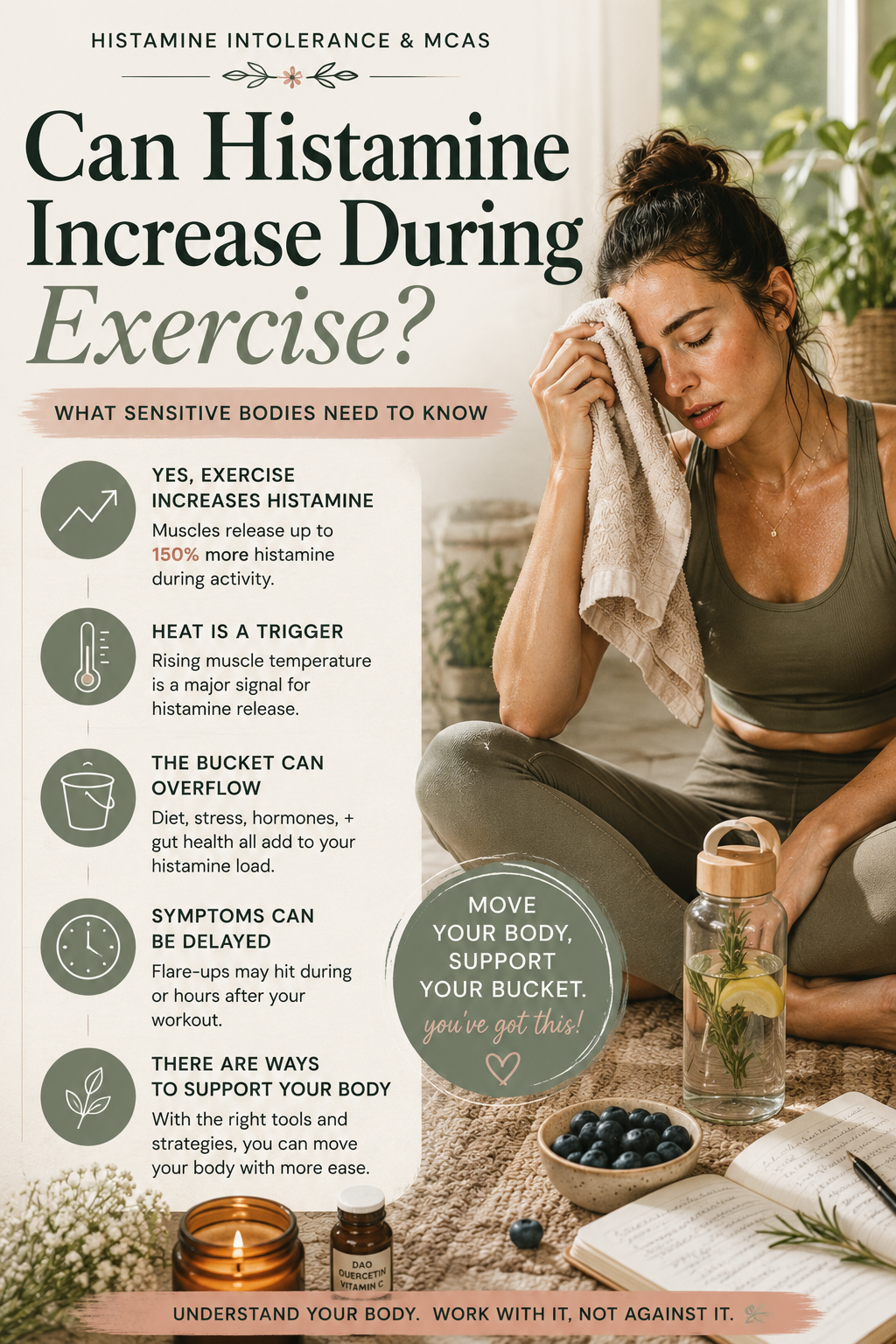
Aerobic exercise induces mast cell degranulation and increases histamine formation by histidine decarboxylase, resulting in an approximately 150% increase in intramuscular histamine.
That is a 150% increase in muscle histamine during exercise. For someone with a healthy DAO enzyme capacity and a histamine bucket that isn't already full, this is manageable. For someone whose bucket is already near the brim — because of diet, stress, hormones, gut dysbiosis, or MCAS — that 150% increase is what tips them into a flare.
Why Does Exercise Trigger Histamine Release? The Role of Heat
When humans exercise, there is an increase in blood flow to the skeletal muscle. This increase in blood flow lasts for several hours after exercise as a result of vasodilation in the blood vessels, increasing the diameter of blood vessels. Previous studies have shown that this vasodilation is largely the result of a release of histamine.
So the histamine being released during exercise is actually serving a purpose — it is causing your blood vessels to widen so that more blood, oxygen, and nutrients can reach your working muscles. This is a beneficial, normal part of how your body adapts to movement.
It appears that exercise-associated changes in skeletal muscle temperature are sufficient to generate elevations in intramuscular histamine concentration. In other words, the rise in muscle temperature that happens when you exercise is one of the primary signals triggering histamine release. The warmer your muscles get, the more histamine is produced and released.
This also explains why exercising in hot environments, doing high intensity workouts that raise core temperature dramatically, or exercising when you are already warm from summer heat tends to trigger more severe symptoms in histamine sensitive women than cooler, gentler movement.
Why This Hits Histamine Sensitive Women So Hard
For most people, the histamine produced during exercise gets broken down efficiently by enzymes — primarily DAO (diamine oxidase) in the gut and HNMT (histamine N-methyltransferase) in tissues. The histamine does its job facilitating vasodilation and recovery, then gets cleared before it causes symptoms.
But for women with histamine intolerance, MCAS, or mast cell sensitivity, one or more parts of this clearance system is compromised. Both MCAS and histamine intolerance can be triggered by many things, including exercise, alcohol, and certain medications, as well as environmental factors like stress, infections, hot or cold temperatures, and strong smells. Hormones: changes in estrogen levels can make symptoms worse for some people, especially women.
This is the histamine bucket concept in action. Your bucket might already be partially full from your morning coffee, a high histamine meal, stress at work, or where you are in your cycle. Then you add the histamine load from exercise on top of that — and the bucket overflows.
People with MCAS often experience symptoms like fatigue, muscle weakness, dizziness, rapid heartbeat, flushing, headaches, brain fog, and increased pain during or after exercise. These symptoms may appear immediately or several hours later. Exercise raises body temperature and changes blood flow, which can trigger mast cells to release inflammatory chemicals. This leads to inflammation, blood vessel dilation, low blood pressure, and delayed recovery.
The delayed symptom presentation is one of the most confusing and underrecognized aspects of this. You might feel fine during your workout and then crash two hours later — or wake up the next day completely wiped out. The connection to exercise can be genuinely hard to identify when the reaction is delayed.
The Symptoms: What Exercise-Induced Histamine Overload Actually Feels Like
Skin reactions, including itchy skin, hives, redness, flushing, or a rash, are common symptoms of histamine intolerance during exercise. These reactions can occur on different body parts such as the face, neck, chest, or limbs. Respiratory symptoms include nasal congestion, sneezing, runny nose, difficulty breathing, wheezing, or asthma-like symptoms. Gastrointestinal issues can result in abdominal pain, bloating, gas, diarrhea, or nausea and vomiting during or after exercise. Headaches and migraines are also common — these can range from mild to severe and may persist for hours or even days. Some people may experience dizziness, lightheadedness, or a feeling of imbalance during exercise.
Beyond those more obvious reactions, many women also experience:
A dramatic energy crash one to four hours after exercise that feels completely disproportionate to the workout
Worsening anxiety or a sense of internal agitation after exercise rather than the calm most people feel
Brain fog that sets in after a workout and lasts for hours
Heart palpitations or a racing heart that continues well past the cool-down period
Sleep disruption the night after a workout
Muscle pain or soreness that is significantly worse than expected
If several of these feel familiar — and especially if you have noticed that exercise consistently makes you feel worse rather than better — histamine is very likely part of the picture.
Which Types of Exercise Trigger the Most Histamine
Not all movement is equal when it comes to histamine release. Understanding this helps you make smarter choices about how to move without consistently triggering reactions.
Highest histamine impact: High intensity interval training, running, plyometrics, heavy resistance training with multiple large muscle groups, hot yoga, outdoor exercise in heat or high pollen. These combine high core temperature, significant mechanical muscle stress, and sometimes environmental triggers — the perfect storm for histamine release in sensitive women.
Moderate histamine impact: Moderate cycling, brisk walking, light jogging, strength training with adequate rest between sets, swimming in a cool pool.
Lowest histamine impact: Gentle yoga, walking, Pilates, stretching, Tai Chi, Qi Gong, swimming in cool water, short duration low intensity movement with plenty of recovery time.
Consistent low to medium intensity movement can even help regulate inflammation. Despite the challenges, movement remains critical for overall health. Regular exercise supports cardiovascular function, metabolism, digestion, and musculoskeletal strength. Gentle to moderate activity also promotes mental well-being, reduces anxiety, and enhances sleep quality.
The goal is not to stop exercising. The goal is to find the level and type of movement your body can handle right now and build from there.
How to Exercise Without Triggering a Histamine Flare
These strategies won't eliminate the histamine response to exercise — that is a normal and necessary part of how your body works. But they significantly reduce the likelihood of tipping your bucket into a flare.
Start with your histamine load before you begin. What did you eat this morning? How stressed are you? Where are you in your cycle? Is your gut currently inflamed? A low histamine day is a much safer day to exercise than one where you've already loaded your bucket with high histamine foods, poor sleep, and emotional stress. Track your baseline before you decide how hard to push.
Choose lower intensity movement. The higher the intensity, the more histamine is released and the higher your core temperature climbs. Starting with gentle walking, yoga, or light strength training gives you the benefits of movement without triggering the same magnitude of histamine response as a high intensity session.
Keep cool. Cool your core temperature — try contrast showers, a chilled towel on your hands and feet, or exercising in an air-conditioned environment. Since rising muscle temperature is a primary driver of histamine release during exercise, keeping your body cooler during and after your workout meaningfully reduces the histamine load. Exercise in the coolest part of the day, choose indoor environments in summer, and cool down deliberately with cold water after movement.
Hydrate with electrolytes, not just water. Drinking water before and during activity helps flush out excess histamine. But plain water alone can dilute the electrolytes your mast cells depend on for stability. Adding a clean electrolyte — one without citric acid or artificial flavors — supports both hydration and mast cell function simultaneously.
Give yourself full recovery between sessions. Because histamine release is associated with delayed onset muscle soreness, allowing the muscles to recover almost fully before the next workout can reduce the surge of inflammation and histamine release at the next training session. As your muscles begin to become accustomed to the exercises and physical exertion, your intensity can increase and rest periods decrease. More rest days than you think you need is not a setback. It is strategy.
Consider pre-exercise mast cell support. Supplements like vitamin C and quercetin taken about 30 minutes before activity can help stabilize mast cells and reduce reactions. Quercetin in particular is one of the most well-researched natural mast cell stabilizers available and is widely used by women managing MCAS and histamine intolerance. Always introduce new supplements on non-exercise days first to establish tolerance before combining them with a workout.
Wear loose, breathable clothing. Wear loose, breathable clothing to reduce friction-triggered histamine release. Tight, synthetic fabrics create both friction and heat against the skin — both of which can independently trigger mast cell activation in sensitive women. Fact vs Fitness
Time your exercise around your cycle. Estrogen promotes mast cell activation and histamine release, while progesterone has a more stabilizing effect. Many women find their histamine tolerance is lowest in the late follicular phase and around ovulation when estrogen peaks. The luteal phase, when progesterone rises, can sometimes feel slightly safer for more intense movement. Track your cycle alongside your exercise tolerance to find your own pattern.













A Realistic Approach to Movement When Your Histamine Is Reactive
Here is the framework that tends to work best for women navigating histamine intolerance and still wanting to stay active.
Phase one — establish a safe baseline. Choose the gentlest possible form of movement you can do without triggering symptoms. This might be a ten minute walk. It might be five minutes of gentle stretching. That is a legitimate starting point. Consistency at a tolerable level matters far more than intensity at a level that floors you for days.
Phase two — build duration before intensity. Once you can walk for 20 to 30 minutes without a significant histamine response, you have established some baseline exercise tolerance. Only then is it worth considering adding any intensity. Duration first, intensity later.
Phase three — add intensity incrementally. Increase the demand on your system in very small steps — a slightly faster pace, a small amount of resistance, five more minutes. Any increase in symptoms means you have moved faster than your system is ready for. Scale back and hold steady.
Track everything. Keep a simple log of what type of exercise you did, the duration, the time of day, your baseline histamine load that day, and your symptoms in the hours and day after. Patterns will emerge that are specific to your body — and that information is more useful than any generic advice.
The Bigger Picture: Exercise Is Still Good for Histamine Intolerance
Here is something worth sitting with: regular, appropriately paced exercise is actually one of the tools that supports histamine regulation over time. It reduces baseline inflammation, supports the nervous system, improves gut motility, and helps regulate the stress response that directly affects mast cell reactivity.
The problem is not exercise itself. The problem is too much, too fast, at the wrong time, with a bucket that is already too full.
Finding your way to sustainable, low-reactive movement is one of the most worthwhile things you can do for your overall histamine health. It requires patience, attention, and a willingness to start smaller than feels satisfying. But it is absolutely possible.