

Why High Protein Calms Anxiety: What's Actually Happening When You Feel Better After Eating Steak
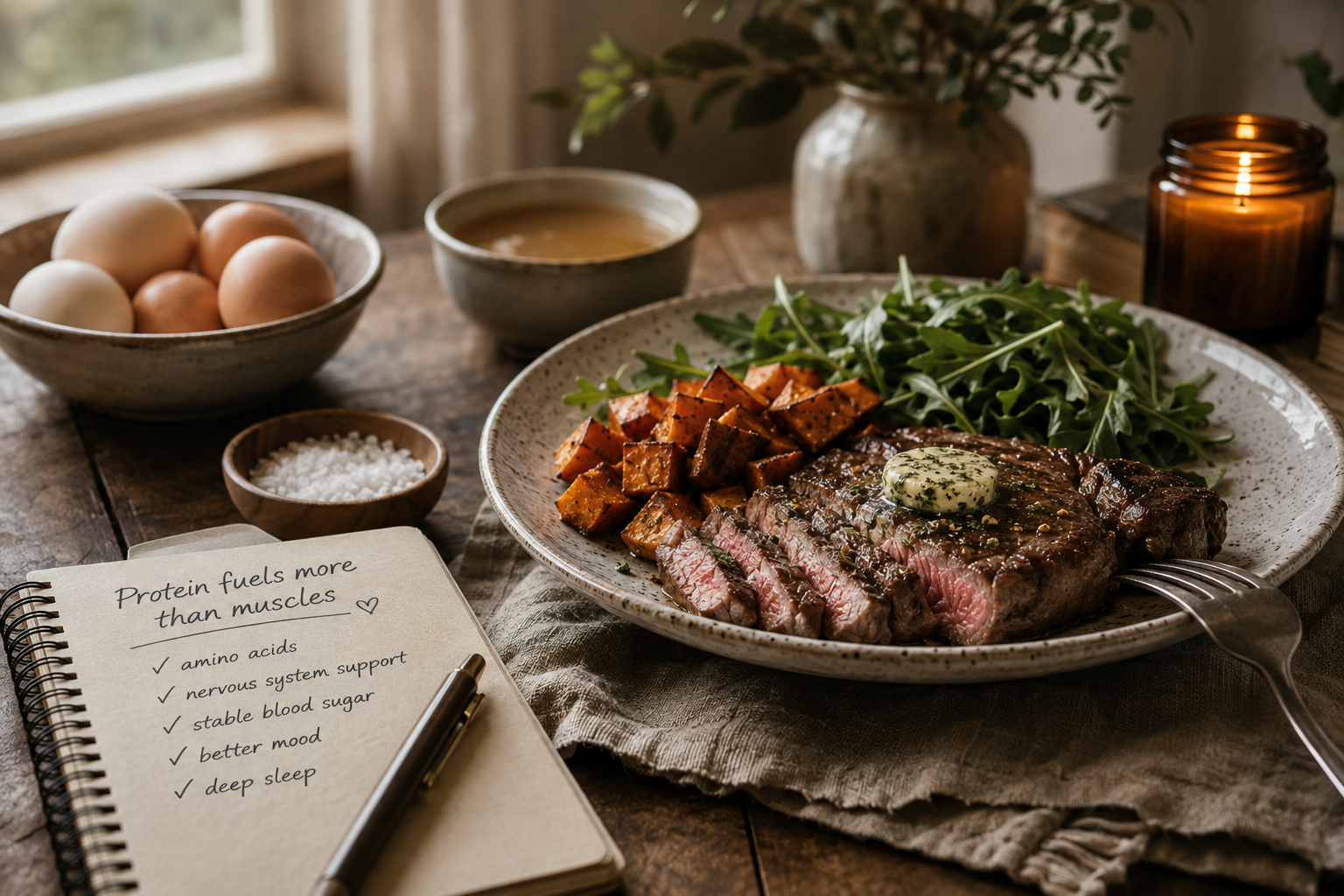
There is a particular kind of calm that settles over you after a genuinely nourishing protein-rich meal. It is not the food coma of too many carbohydrates. It is something steadier. A groundedness. A quieting of the mental noise. An ease in your body that you didn't realize you were missing until you suddenly had it.
Women describe this in strikingly similar ways.
"I always feel so much calmer after I eat red meat. Is that weird?"
"I don't know why but I feel less anxious when I've had a steak."
"A burger makes my anxiety go away better than anything. I'm embarrassed to admit it."
What you are experiencing is your nervous system recognizing and responding to nutrients it has likely been running low on. And once you understand why, you can stop wondering if you're imagining it and start using this information strategically.
The Connection Between Protein, Amino Acids, and Your Brain Chemistry
Your brain runs on neurotransmitters, which are chemical messengers that regulate your mood, your stress response, your ability to feel calm, your sleep, your focus, and your sense of wellbeing.
The most relevant ones for anxiety are:
Serotonin — your calm, content, emotionally stable neurotransmitter. Low serotonin is closely associated with anxiety, irritability, poor sleep, and that low-grade sense of dread that sits in the background without a clear cause.
GABA (gamma-aminobutyric acid) — your brain's primary calm-down signal. GABA quiets overexcited neurons, puts the brakes on racing thoughts, and allows your nervous system to shift from high alert to genuine rest.
Dopamine — your focus, motivation, and reward neurotransmitter. When dopamine is adequate, you feel purposeful and clear-headed. When it is low, you feel flat, unmotivated, and emotionally fragile.
Norepinephrine — involved in focus, alertness, and stress regulation. Critically, adequate norepinephrine helps you respond to stress without becoming overwhelmed by it.
Here is the part that changes everything: most neurotransmitters are amino acid derivatives. Proteins are macromolecules composed of one or more long amino acid chains. This means the raw materials for every single one of these calming brain chemicals comes directly from the protein you eat.
When you are not eating enough protein — or not eating enough of the right kinds of protein — you are literally running short on the building blocks your brain needs to regulate your mood and anxiety.











The Amino Acids in Protein That Calm Your Nervous System
Let's get specific. These are the amino acids in high-protein foods, particularly animal proteins, that your brain converts directly into calming neurotransmitters.
Tryptophan — Your Serotonin and Melatonin Precursor
Tryptophan is essential for the production of serotonin, which helps regulate mood, sleep, and appetite, promoting overall well-being.
Tryptophan is the amino acid your body converts into serotonin. Serotonin is then converted into melatonin — the hormone that governs your sleep-wake cycle. This means adequate tryptophan intake supports both daytime mood stability and nighttime sleep quality simultaneously.
The rate of brain serotonin synthesis depends on the concentrations of tryptophan in the brain. Low levels of serotonin as a result of a tryptophan-depleted diet resulted in poor memory and depressed mood.
Red meat, eggs, turkey, and dairy are among the richest dietary sources of tryptophan available. When you eat these foods, you provide a direct supply of the raw material your brain needs to produce the very neurotransmitter most associated with feeling calm, content, and emotionally stable.
Tyrosine — Your Dopamine and Norepinephrine Precursor
Any meal or snack in which protein is a primary component can result in a quick tyrosine boost, signaled by a bump in energy and focus.
Tyrosine is the amino acid precursor to dopamine and norepinephrine. Dopamine gives you motivation, reward, and clarity. Norepinephrine supports your ability to handle stress without being destabilized by it.
Extensive evidence demonstrates that changes in peripheral tyrosine levels influence central dopamine function. Studies have shown that acute dietary tyrosine depletion significantly decreases central dopamine release. In contrast, oral tyrosine supplementation facilitated dopamine metabolite availability in the brain.
This is why a high protein meal doesn't just calm anxiety — it also improves focus and mental clarity at the same time. You're not just reducing the anxiety signal. You're also increasing the neurotransmitters that make you feel purposeful and clear.
Glycine — For GABA and Nervous System Calm
Glycine is one of the most abundant amino acids in animal connective tissue — found in higher concentrations in cuts of beef like brisket, short ribs, and slow-cooked meats, as well as in bone broth and gelatin.
Glycine acts directly on inhibitory receptors in the nervous system and supports GABA function — your brain's primary braking system. Research shows glycine taken before bed improves sleep quality, and adequate glycine intake throughout the day contributes to the kind of nervous system baseline that doesn't tip into anxiety at the slightest provocation.
This is one reason why a slow-cooked grass-fed braise often feels more deeply settling than a lean chicken breast — the connective tissue rich cuts provide glycine alongside the standard amino acid profile.
Phenylalanine — For Mood and Dopamine Synthesis
Phenylalanine is a precursor to neurotransmitters and is important for the synthesis of dopamine and norepinephrine, affecting mood and alertness.
Phenylalanine is converted into tyrosine, which is then converted into dopamine and norepinephrine. It is found in high concentrations in beef, chicken, eggs, and fish — all whole animal protein sources. A diet chronically low in animal protein is a diet chronically undersupplying this foundational chain.
Why Red Meat and Steak Specifically Feel So Calming
This is the question behind the question that most women are actually asking. Not just why protein calms anxiety in general — but why steak in particular seems to have an almost immediate effect that other protein sources don't always match.
The answer is the nutrient package. Red meat is packed with amino acids, saturated fat, omega-3s, cholesterol, antioxidants, B vitamins, iron, zinc, and selenium — all of which the brain needs to produce and transmit neurotransmitters adequately, regulating mood states like anxiety and depression.
Let's break down what that package delivers beyond just the amino acids.
Iron. Red meat is a significant source of highly bioavailable heme iron. Females are at particularly high risk of iron deficiency. Iron deficiency in females of childbearing age has been linked to reduced cognition, mental health, and heightened fatigue. Many women with chronic anxiety are also quietly iron deficient — with ferritin levels low enough to compromise neurotransmitter synthesis, oxygen delivery to the brain, and nervous system regulation, without being low enough to show up as anemia on a standard lab panel. Heme iron from red meat absorbs at two to three times the rate of plant-based iron. When iron-deficient women eat red meat, the improvement in neurological function can be felt within hours of a meal — not just over weeks of supplementation.
Zinc. Low levels of zinc also appear to be associated with a higher risk of depression. Zinc plays a role in reducing inflammation in the brain. Zinc is required for the conversion of tryptophan into serotonin and for GABA receptor function. Red meat, particularly beef, is one of the richest dietary sources of bioavailable zinc available. Women who are zinc deficient — which is extremely common in those with burnout, poor gut absorption, or who rely heavily on plant-based protein — often experience a measurable improvement in anxiety when zinc intake improves.
Vitamin B12. Vitamin B12 plays a fundamental role in producing serotonin, the brain's feel-good neurotransmitter. Low levels of serotonin have been linked to an increased risk of depression and anxiety. Protein helps balance cortisol and blood sugar; vitamin B12 can bring an energy boost to ward off stress. B12 is found almost exclusively in animal foods. It is required for myelin synthesis — the protective coating around your nerve fibers that allows for fast, efficient nervous system signaling. Low B12 means a nervous system that is literally slower to regulate itself. Many anxious women are quietly B12 deficient, particularly those on plant-based diets or those with gut absorption issues.
Creatine. Red meat and beef in particular are among the richest dietary sources of creatine — a compound that provides rapid energy to brain cells and has been shown in research to support cognitive function, reduce mental fatigue, and improve mood. Creatine is not found in plant foods. Women who eat little or no red meat tend to have lower creatine stores, which may contribute to the brain fog, fatigue, and emotional fragility that often accompanies anxiety.
Saturated fat and cholesterol. Numerous studies have shown that depression and suicide increase when diets are low in fat and cholesterol. Your nervous system and brain require adequate saturated fat and cholesterol to function — both are structural components of cell membranes and myelin. A diet that is chronically very low in fat and cholesterol can impair nervous system integrity over time in ways that compound anxiety and mood instability.
The Blood Sugar Piece — Why Protein Is an Anxiety Intervention Beyond Neurotransmitters
There is another reason a high protein meal calms anxiety almost immediately that has nothing to do with neurotransmitter synthesis and everything to do with blood sugar.
Anxiety is profoundly worsened by blood sugar instability. When blood sugar drops — even mildly — your adrenal glands release cortisol and adrenaline to bring it back up. Those stress hormones create the exact internal environment of a threat response: racing heart, tight chest, anxious thoughts, inability to settle.
A diet that is high in carbohydrates promotes inflammation, feeds microbial overgrowth, disrupts the endocrine system and hormone balance, depletes calming neurotransmitters like GABA and serotonin, increases excitatory neurotransmitters like glutamate and norepinephrine, causes blood sugar fluctuations, and encourages sympathetic nervous system dominance, all of which has a profound impact on mental health.
A high protein meal — particularly one that includes protein and healthy fat — stabilizes blood sugar for hours. No spike, no crash, no cortisol surge. The absence of that blood sugar rollercoaster is itself profoundly calming. Your adrenal glands don't need to activate. Your cortisol stays low. Your nervous system can actually rest.
This is one reason why women who skip meals or survive on high-carbohydrate convenience foods tend to have significantly more anxiety than women who eat regular protein-anchored meals — regardless of any other lifestyle factors. The blood sugar connection to anxiety is one of the most underrecognized and most immediately addressable root causes.


Why Women Are Especially Affected by Protein Deficiency and Anxiety
This is not gender neutral. Women are disproportionately affected by the connection between protein adequacy and anxiety for several specific reasons.
Women lose iron through menstruation every month. Women are more likely to eat smaller portions of protein at meals due to diet culture messaging around calories and meat. Women are more likely to be on restrictive diets that eliminate animal foods. Women have higher rates of gut absorption issues that impair amino acid uptake even when protein intake seems adequate. And women are more likely to prioritize other people's nutrition over their own — a pattern that results in chronic dietary underinvestment in themselves.
The result is that a significant number of anxious women are running on depleted neurotransmitter precursors, low iron, low zinc, low B12, and inadequate glycine — often without knowing it. They've been told their anxiety is psychological. That it is a stress management issue. That they need to meditate more or worry less. Nobody has asked them how much protein they ate yesterday. Or the day before. Or in the last year.


What to Eat to Use This Information Practically
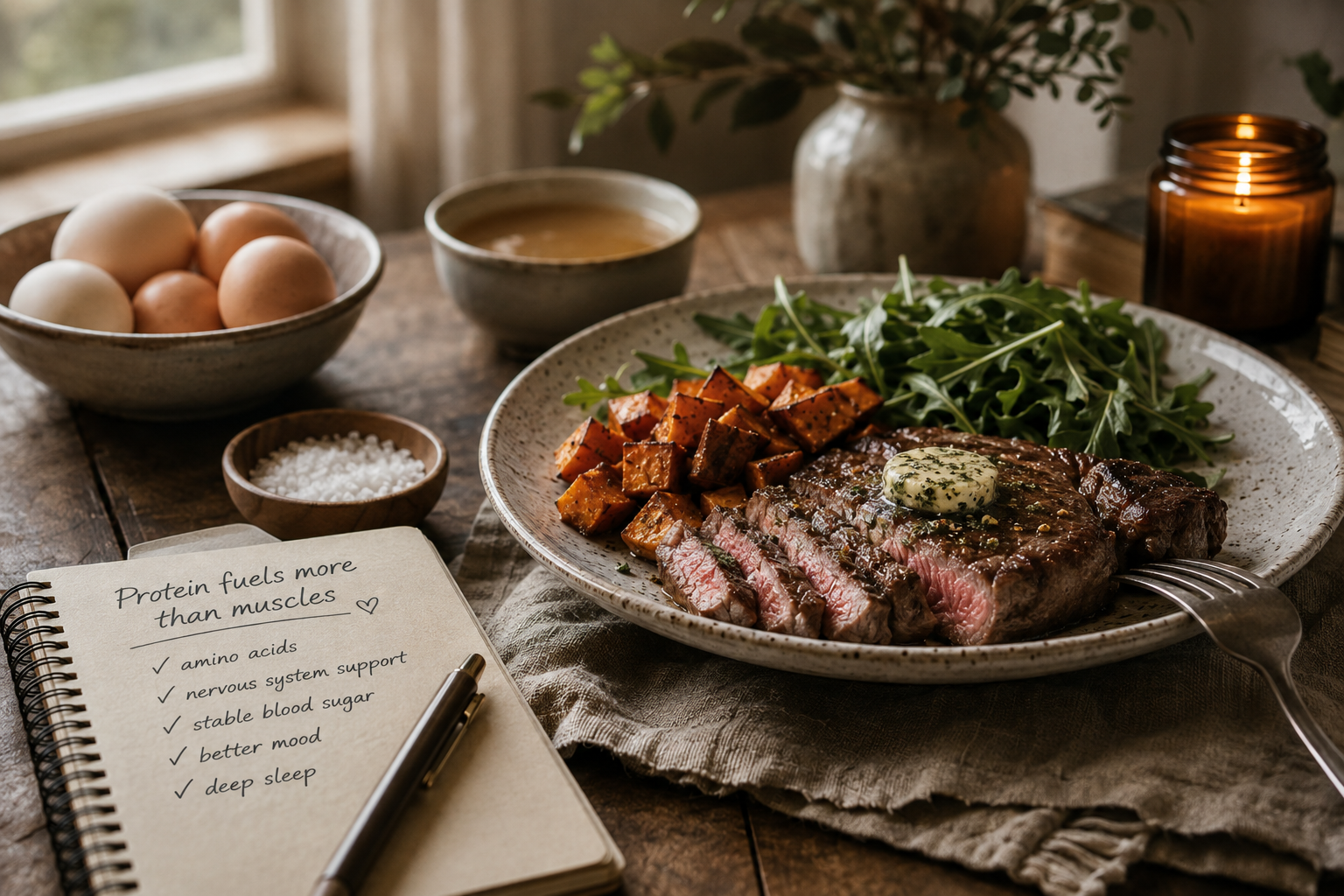
You do not need to eat steak three times a day. You need to eat enough quality protein consistently, across your meals, so that your brain always has the raw materials it needs to regulate your mood and stress response.
For the calming amino acid profile specifically: Beef, lamb, eggs, poultry, and organ meats like liver are the richest sources of the complete amino acid profile, iron, zinc, B12, and creatine that support nervous system calm. Grass-fed and pasture-raised sources provide a more favorable omega-3 to omega-6 ratio which further supports anti-inflammatory brain function.
Aim for protein at every meal. The neurotransmitter precursor amino acids need to be consistently available throughout the day — not just in one large meal. Distributing protein intake across breakfast, lunch, and dinner maintains a more stable supply of tryptophan, tyrosine, and glycine for your brain to work with.
Breakfast matters most. Starting the day with protein — not just carbohydrates — sets your blood sugar rhythm for the entire day. A high protein breakfast significantly reduces afternoon anxiety and cortisol spikes compared to a carbohydrate-heavy breakfast in women.
Don't fear the fat. The fat in animal protein is not the enemy. It is a critical part of the nutrient package — supporting hormone production, myelin integrity, and the absorption of fat-soluble vitamins that support nervous system function. A lean chicken breast and a grass-fed ribeye are not equivalent in their neurological impact.
Support absorption. Even the best protein-rich diet only delivers its full benefit if your gut can absorb what you eat. Chronic stress, gut dysbiosis, and low stomach acid — all extremely common in anxious women — impair amino acid absorption. Supporting gut health alongside protein intake means more of what you eat actually reaches your brain.
A Note on Plant-Based Protein and Anxiety
This is not an anti-plant-based post. Many women do beautifully on diets that include plant proteins. But it is worth being honest about a few things.
Plant proteins are generally lower in bioavailable iron, zinc, and B12 than animal proteins. They do not contain creatine. The amino acid profile — while complete when combined thoughtfully — is less concentrated in the specific precursors most relevant to anxiety. And plant proteins often require more digestive work to break down into usable amino acids, which means women with compromised gut function may absorb less than they think.
The absorption of amino acids is considered lower from plant sources than from animal sources.
This does not mean plant-based women must eat meat to manage anxiety. It means they need to be especially intentional about combining proteins, ensuring adequate iron and B12 through supplementation, and monitoring their mood and nervous system response as signals of nutritional adequacy.
If you are plant-based and struggling with anxiety, it is worth examining whether your protein quality and micronutrient status — not just your protein quantity — are meeting what your nervous system actually needs.













https://ods.od.nih.gov/factsheets/Protein-HealthProfessional/
https://ods.od.nih.gov/factsheets/VitaminB12-HealthProfessional/
https://ods.od.nih.gov/factsheets/Iron-HealthProfessional/
https://ods.od.nih.gov/factsheets/Zinc-HealthProfessional/
https://pubmed.ncbi.nlm.nih.gov/14672862/
https://pubmed.ncbi.nlm.nih.gov/19841581/
https://www.sleepfoundation.org/nutrition/protein-and-sleep
https://www.health.harvard.edu/blog/follow-a-healthy-plate-for-better-health-202303022897