

Ovarian Cysts vs. PCOS: The Herbs, Teas & Supplements That Make Sense for Each (and Which Don't)
You Googled "ovarian cyst" or "PCOS," landed on a wellness blog, and now you own a cabinet full of supplements that may not even match your actual problem. That happens a lot. Ovarian cysts and PCOS get lumped together constantly, even though they're not the same thing, and the herbs that help one can be pointless — or even a bad idea — for the other.
Let's sort this out clearly, so you stop guessing.
Quick Answer
A simple ovarian cyst is usually a one-time, harmless fluid sac tied to a single menstrual cycle, and it often goes away on its own within a few months. PCOS (polycystic ovary syndrome) is an ongoing hormone condition involving irregular ovulation and higher androgen levels, and the "cysts" seen on ultrasound in PCOS are actually small, unreleased follicles, not true cysts. Because the two problems work differently, the supplements that help each one are different too. Inositol, berberine, and spearmint tea have real human research behind them for PCOS, but there's little reason to expect them to do anything for a simple functional cyst, which usually just needs time, not a supplement stack.
1. Ovarian Cyst vs. PCOS: What's Actually Different
A Simple (Functional) Ovarian Cyst
Every month, your ovary grows a small fluid sac called a follicle to release an egg. Most of the time, the follicle pops, releases the egg, and disappears. Sometimes it doesn't pop, or it seals back up after releasing the egg. Either way, you're left with a fluid-filled sac, a functional cyst.
Usually one cyst, one ovary, one cycle
Often has no symptoms at all, found by accident on a scan
Can cause mild pelvic pain, bloating, or a dull ache on one side
Usually shrinks on its own within one to three menstrual cycles
Not caused by a hormone disorder — it's a normal, if occasionally annoying, part of a working cycle
PCOS (Polycystic Ovary Syndrome)
PCOS is not about having cysts. Doctors diagnose it when a woman has at least two of these three things: irregular or missing ovulation, higher-than-typical androgen levels (shown in blood work or symptoms like acne and extra hair growth), and/or many small follicles seen on an ovarian ultrasound.
Those "polycystic" follicles are actually small, immature eggs that never fully developed, not true fluid cysts
It's an ongoing pattern, not a one-time event
Often tied to insulin resistance, where your body needs more insulin than it should to manage blood sugar
Common signs: irregular periods, acne, extra hair growth, scalp hair thinning, weight changes, and trouble getting pregnant
Bloomin' Well take: If a scan showed "cysts" and nothing else was said about your hormones, periods, or blood work, you very likely have a simple functional cyst — not PCOS. If your doctor mentioned irregular cycles, androgens, or insulin resistance along with the ultrasound, that's a PCOS conversation. These two situations call for genuinely different next steps.
2. Why the Herbs Aren't Interchangeable
A simple cyst is a plumbing problem, a sac that didn't drain on schedule. PCOS is a hormone signaling problem that shows up cycle after cycle. Most of the herbs and supplements marketed for "ovarian cysts" are actually studied in PCOS research, because that's where the funding and the demand are. That doesn't mean they'll do anything for a one-time functional cyst.
Taking a PCOS-strength supplement stack for a simple cyst that was already going to resolve on its own isn't dangerous in most cases, but it's not doing what the label implies either. And going the other direction — treating PCOS with only "time and patience," the way you'd treat a simple cyst — usually leaves the actual insulin and androgen problems unaddressed.
3. What Helps a Simple Functional Cyst
Honestly? Not much beyond time, in most cases.
Time and monitoring. Most simple cysts resolve within one to three cycles without any intervention. A follow-up ultrasound is the standard way to confirm this.
Heat and gentle movement for comfort during a cyst that's causing mild pain — a heating pad, rest, and normal daily activity.
NSAIDs like ibuprofen, used as needed, for pain — not an herbal question, but worth naming since it's genuinely the most evidence-backed comfort measure for cyst-related pain.
Warming Chinese herbal approaches for blood stasis or cold patterns may have a supporting role if cysts come with clotty, painful periods, but the human research here is about period pain broadly, not shrinking a specific cyst.
What doesn't have real evidence: DIM, milk thistle, "cyst-clearing" tea blends, and detox-style supplements marketed specifically to shrink or dissolve a functional cyst. These products lean on PCOS or general hormone research and stretch it to cover something it wasn't tested on.
When a cyst needs more than time: Sudden, severe one-sided pain, fever, dizziness, or pain during a specific activity can mean the cyst has ruptured or the ovary has twisted (ovarian torsion). This is an emergency, not a supplement question. Go get evaluated the same day.
4. What Has Real Evidence for PCOS
This is where the actual research lives. PCOS involves insulin resistance and higher androgens for most women, and the best-studied supplements target one or both of those.
Myo-Inositol (often with D-Chiro-Inositol)
What it is: A vitamin-like compound involved in how your cells respond to insulin.
What the evidence shows: A large 2026 umbrella review pooling 13 meta-analyses found real, if inconsistent, benefits for hormone and metabolic markers, with the strongest, most reliable signal for ovulation. A 2023 review used to help write the international PCOS treatment guidelines called the evidence "limited and inconclusive" overall, while still supporting its use in shared decision-making with a provider.
How it's typically used in research: A 40:1 ratio of myo-inositol to D-chiro-inositol, since that mirrors the natural ratio found in a healthy body, at a total of 2 to 4 grams a day.
Bloomin' Well take: This is the most "try it and see" supplement on this list. The evidence isn't perfect, but the safety profile is strong and side effects are mild and rare.
Berberine
What it is: A compound found in barberry, goldenseal, and Oregon grape root.
What the evidence shows: A 2025 overview of 54 systematic reviews found berberine improved most PCOS-related outcomes studied, especially insulin resistance, cholesterol markers, and androgen levels. A separate 2024 meta-analysis of 10 trials found it improved ovulation and pregnancy rates when added to standard care.
Safety notes: Berberine can interact with diabetes medication and lowers blood sugar on its own, so it needs monitoring if you're on other glucose-lowering drugs. It's generally not recommended in pregnancy.
NAC (N-Acetylcysteine)
What it is: An amino acid–derived antioxidant, also used for endometriosis support in our companion NAC guide.
What the evidence shows: A 2024 Cochrane-affiliated review found NAC improved ovulation and pregnancy rates in PCOS, with effects that held up reasonably well against metformin in some head-to-head trials.
Spearmint
What it is: Yes, the mint. Specifically spearmint tea or extract.
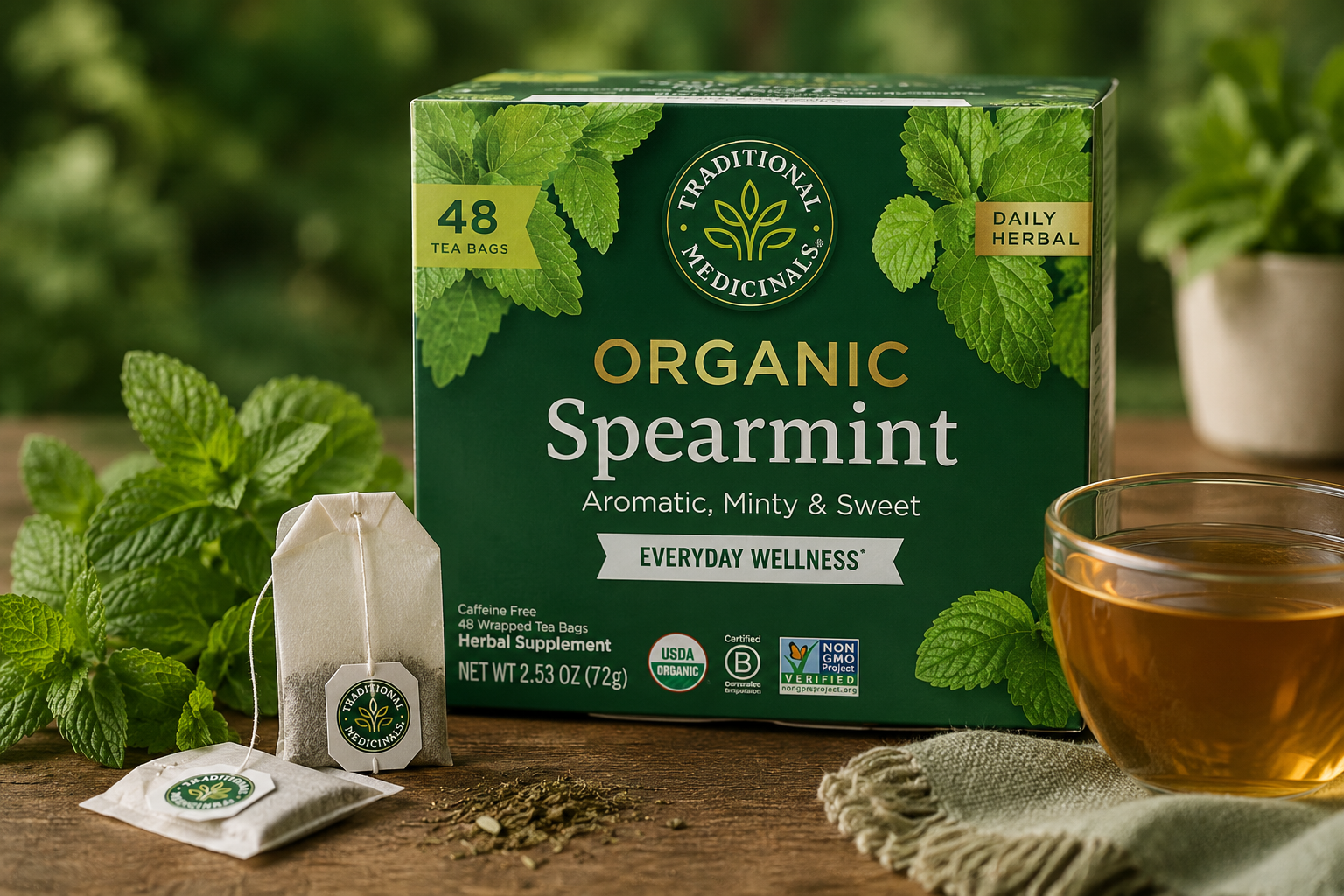
What the evidence shows: Human studies have found spearmint tea, taken daily, modestly lowered androgen levels and self-reported hair growth (hirsutism) in women with PCOS. It's one of the few genuinely food-based options with real human data behind it, not just animal studies.
Bloomin' Well take: This is a nice, low-risk daily habit for the androgen side of PCOS — two cups a day, consistently, for at least a month before expecting to notice anything.
Vitamin D and Omega-3s
Correcting a vitamin D deficiency (common in PCOS) has been linked to improved insulin markers. Omega-3s (EPA and DHA) have decent evidence for lowering triglycerides and inflammation markers that often run high in PCOS. Neither is a PCOS-specific miracle, but both are reasonable, well-tolerated additions if your levels or labs support it.
5. Herbs and Supplements That Sound Right But Aren't
This is the section most articles skip, and it's the one that actually saves you money.
Vitex (chasteberry) for PCOS — proceed with real caution. Vitex is genuinely well-studied for PMS, breast tenderness, and mild prolactin issues, and it works partly by nudging luteinizing hormone (LH) upward. PCOS already often involves an LH imbalance relative to FSH. Some practitioners avoid Vitex in PCOS for exactly this reason, while others use it selectively. This is not a "grab it off the shelf" herb for PCOS — it's a "bring it up with your practitioner first" herb.
DIM (diindolylmethane) for a simple cyst. DIM is studied for estrogen metabolism, mostly in contexts like breast health and hormone-driven acne, not for shrinking a functional ovarian cyst. Using it for a one-time cyst is treating a symptom you don't actually have.
"Cyst-clearing" or "detox" tea blends. These are almost always a marketing bundle of mild diuretic and digestive herbs (dandelion, nettle, parsley) with no research behind the specific claim of clearing an ovarian cyst.
Maca root for PCOS androgens. Maca has some research for libido and mood, but the evidence for lowering androgens or improving PCOS-specific markers is thin. It's not harmful, it's just not doing the job some sellers imply.
Random "PCOS supplement" blends without dosing transparency. If a product won't tell you how much inositol, berberine, or NAC is actually in it, it's not letting you compare it to the research at all.






6. What Chinese Medicine Adds to the Picture
In Traditional Chinese Medicine, both simple cysts and PCOS often get filed under "phlegm-damp" and "blood stasis" patterns — the idea that fluid and blood aren't moving or draining the way they should, sometimes worsened by "spleen qi deficiency" (a TCM concept related to digestion and metabolism, not the Western spleen organ).
For PCOS specifically, TCM practitioners often combine blood-moving herbs with ones that address this phlegm-damp pattern, and there's a growing body of Chinese research on formulas alongside inositol or metformin. For simple cysts, TCM's approach overlaps more with our period pain guide — Guizhi Fuling Wan and similar blood-moving formulas — since a single cyst causing cramping looks similar to a blood stasis pattern in that framework.
As always, formula selection depends on your full pattern, not just the word "cyst" or "PCOS" on a chart. This is a conversation for a licensed herbalist, not a self-selected formula.
7. What to Look for Before You Buy Anything
A labeled dose that matches the research, not a proprietary blend. If a PCOS product doesn't say how many grams of inositol or milligrams of berberine it contains, skip it.
Third-party testing, especially for berberine products, since potency between brands can vary widely.
The correct inositol ratio. Look for a 40:1 myo-inositol to D-chiro-inositol ratio specifically — high-DCI-only products may work against you.
A form you'll actually take consistently. Spearmint tea only works if you drink it daily for weeks, not once.
Practitioner guidance for anything beyond the basics — berberine, Vitex, and Chinese herbal formulas all have real interaction and timing considerations worth a second set of eyes.
8. Safety First
Pregnancy: Berberine and most Chinese blood-moving formulas are not recommended in pregnancy. Talk to your provider about inositol, NAC, and vitamin D if you're pregnant or trying to conceive — several are used in fertility contexts, but dosing should be guided.
Diabetes medication: Berberine can add to the blood-sugar-lowering effect of metformin or other diabetes drugs. This combination needs monitoring, not guesswork.
New or severe pain: A functional cyst is usually painless or mildly uncomfortable. Sudden, sharp, one-sided pain with fever, vomiting, or fainting is a same-day medical concern, not a supplement question.
Unexplained bleeding changes, rapid weight change, or new hair growth/loss: Worth a full hormone workup with your doctor before you start layering supplements — you want to know what you're actually treating.
Vitex and PCOS: As covered above, don't self-start this one for PCOS without a conversation with a practitioner familiar with your hormone panel.
9. Not Sure Where to Start?
If you're staring at an ultrasound report with the word "cyst" on it and no idea whether you're dealing with a one-time thing or an ongoing pattern, that confusion is completely normal — and it's exactly the kind of thing worth sorting out before you spend money on supplements.
Request an Educational Consultation →
We'll help you understand what your results likely mean, which questions to bring back to your doctor, and which of the options above actually fits your situation.
10. FAQ
Can a simple ovarian cyst turn into PCOS? No. They're different processes. Having had a functional cyst doesn't raise your risk of developing PCOS, and having PCOS doesn't mean you'll also get separate functional cysts, though both can technically happen in the same person.
Do I need surgery for an ovarian cyst? Most simple cysts don't need surgery and are simply monitored with a repeat ultrasound. Surgery becomes a conversation for cysts that are very large, growing, causing ongoing pain, or have a concerning appearance on imaging.
Will inositol or berberine help a one-time cyst? There's no research suggesting either does anything for a simple functional cyst. They're insulin- and hormone-pathway supplements studied specifically in PCOS, an ongoing condition, not a one-cycle event.
How do I know if my "cysts" are PCOS or just cysts? The ultrasound alone can't tell you. PCOS requires at least two of three things: irregular ovulation, higher androgens, or the polycystic pattern on ultrasound. A single ultrasound finding without irregular cycles or androgen symptoms usually points toward simple cysts instead.
Is spearmint tea really backed by research, or is that just wellness-blog talk? It's genuinely studied. Small human trials have measured lower androgen levels and reduced hirsutism scores with daily spearmint tea in women with PCOS — modest effects, but real ones, not just herbal folklore.
Can I take inositol and berberine together? Some research and clinical practice combine them because they work through different pathways, but combining supplements that both affect blood sugar is worth discussing with a provider, especially if you're also on medication.


References
Zheng, X. et al. "Effects of inositol in women with polycystic ovary syndrome: an umbrella review of meta-analyses from randomized controlled trials." Frontiers in Endocrinology, 2026;17:1741509.
"Inositol for Polycystic Ovary Syndrome: A Systematic Review and Meta-analysis to Inform the 2023 Update of the International Evidence-based PCOS Guidelines." PMC, 2023.
"Berberine overview of 54 systematic reviews on PCOS outcomes." BMC, 2025.
Wang et al. "Berberine added to standard care: meta-analysis of 10 RCTs on ovulation and pregnancy rates." Reproductive Biomedicine Online, 2024.
"Cochrane-affiliated review of NAC in PCOS: ovulation, pregnancy rates, and insulin sensitivity." 2024.
Grant, P. "Spearmint herbal tea has significant anti-androgen effects in polycystic ovarian syndrome. A randomized controlled trial." Phytotherapy Research, 2010.
Van Die, M.D. et al. "Vitex agnus-castus extracts for female reproductive disorders: a systematic review of clinical trials." Planta Medica, 2013.
Arentz, S. et al. "Herbal medicine for the management of polycystic ovary syndrome (PCOS) and associated oligo/amenorrhoea and hyperandrogenism." BMC Complementary and Alternative Medicine, 2014;14:511.
Mehraban, M. et al. "A combination of spearmint and flaxseed extract improved endocrine and histomorphology of ovary in experimental PCOS." Journal of Ovarian Research, 2020;13:32.
How We Researched This Guide: This article was developed using current human clinical research, systematic reviews and meta-analyses, and established herbal medicine references. Evidence was weighed by strength, sample size, and study quality, and animal or preliminary findings were labeled as such rather than presented as settled.
This article is for education, not diagnosis or treatment. Talk with a licensed healthcare provider before starting any supplement or herbal formula, especially if you are pregnant, breastfeeding, on diabetes or hormonal medication, or have new or severe pelvic pain.