

The Best Herbal Tea for Period Cramps, Heavy Bleeding & Hormone Support: 10 Herbs Explained
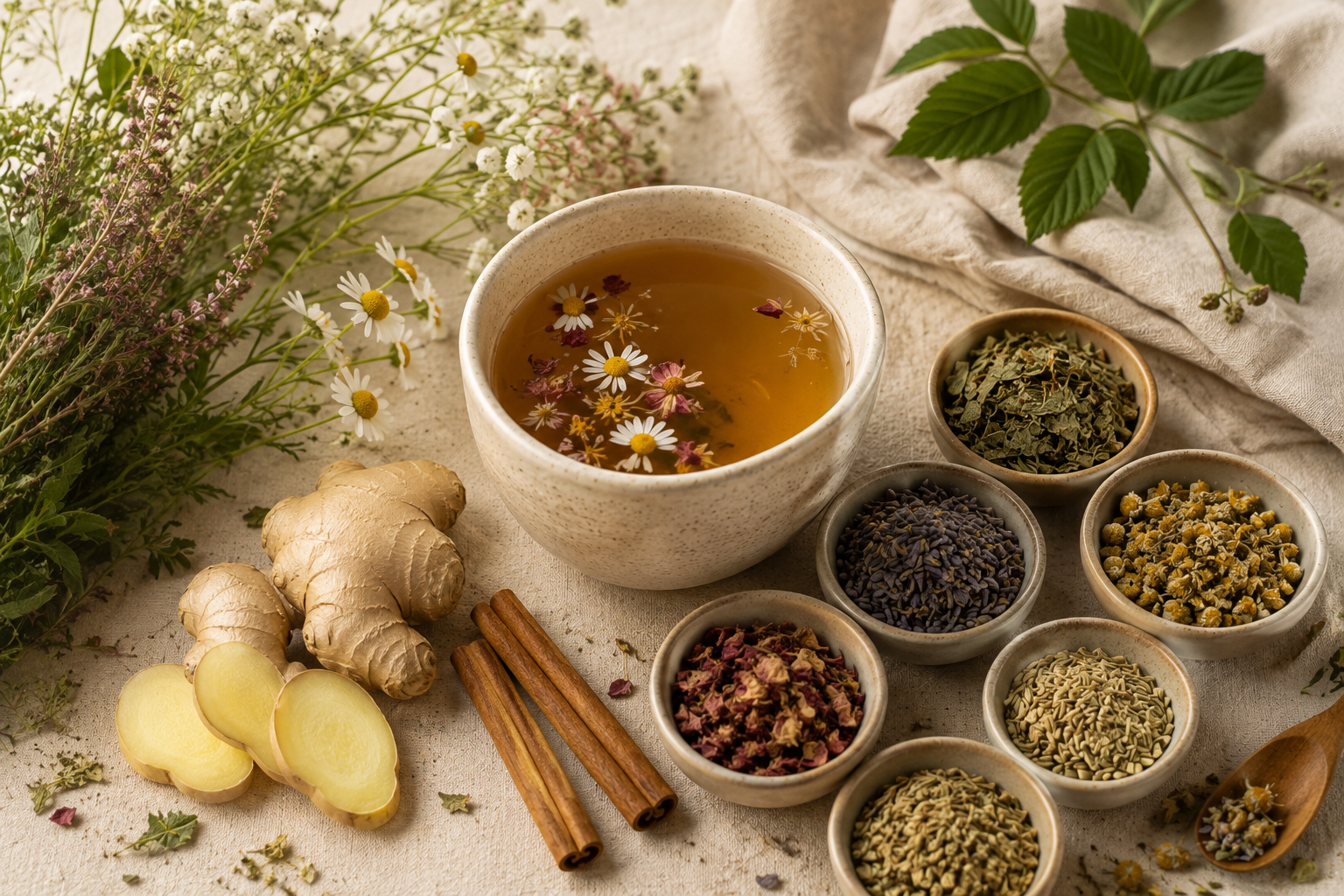
Not every period problem needs the same tea. Cramps, heavy bleeding, and hormone swings are three different problems, and the herb that helps one might do nothing for another. This guide walks through 10 herbs used in teas for period support, what they're actually good for, and what real human research says — not just what the label promises.
Quick Answer
For period cramps, ginger and fennel tea have the strongest human research, working about as well as common pain relievers in several studies. For heavy bleeding, shepherd's purse and yarrow have traditional use and some early clinical support, though the evidence is still thin. For general hormone support, red raspberry leaf and chamomile are popular and low-risk, but the proof behind them is mostly traditional use, not strong trials. No tea replaces a doctor's visit for very heavy bleeding or pain that stops you from living your life — but for mild-to-moderate symptoms, a handful of these herbs are genuinely backed by real studies, not just wellness folklore.
At a Glance
Cramps respond best to ginger, fennel, and cinnamon tea, all with real human trial data.
Heavy bleeding has fewer well-studied herbal options; shepherd's purse has the most research behind it.
Raspberry leaf and chamomile are popular "hormone support" teas but rest more on tradition than strong trials.
Some herbs on this list are not safe in pregnancy — check before you sip.
Tea is a lower dose than capsules or tinctures, so give any of these two to three cycles before deciding if they help.
How to Read the Evidence in This Guide
Herbal tea research ranges from strong (real randomized trials on real women) to thin (mostly tradition and small animal studies). We've marked each herb below so you know exactly what you're getting:
Strong human evidence — multiple randomized trials, sometimes compared directly to medicine
Some human evidence — a few small trials, promising but not yet proven at a large scale
Mostly traditional use — long history of use, but little to no modern clinical trial data
None of these levels mean "don't bother." They just mean you should match your expectations to the evidence.
Best for Cramps
1. Ginger — Strong human evidence
Ginger has more research behind it for period cramps than any other herb on this list. Multiple systematic reviews and meta-analyses, pooling several randomized trials, found ginger meaningfully reduced pain compared to a placebo, and worked about as well as common pain relievers like ibuprofen and mefenamic acid in head-to-head trials. One 2025 randomized trial specifically using ginger tea (not capsules) in adolescent girls found real reductions in pain severity and cramping.
How it's thought to work: Ginger calms the same inflammatory chemicals (prostaglandins) that cause the uterus to cramp down hard during your period.
How to use it: Fresh ginger slices steeped 10 minutes in hot water, starting a day before your period and continuing through the first heavy days. Most trial doses used the equivalent of 750–2,000 mg of ginger powder a day, which is stronger than a typical tea — a concentrated tea, steeped longer with more ginger, gets you closer to that range.
Safety notes: Generally well-tolerated. High doses can interact with blood-thinning medication, so check with your doctor if you're on one.
2. Fennel — Strong human evidence
Fennel is genuinely one of the better-studied herbs here. A meta-analysis pooling multiple randomized trials found fennel worked about as well as standard pain medication for period cramps, and clearly better than a placebo.
How it's thought to work: Fennel appears to relax the uterine muscle and calm the same prostaglandin-driven contractions behind cramping.
How to use it: Crush 1 teaspoon of fennel seeds, steep 10 minutes, drink up to twice daily during your period.
Safety notes: Fennel has mild estrogen-like activity in lab studies, so it's generally used cautiously by anyone with an estrogen-sensitive condition, and avoided in pregnancy beyond food amounts.
3. Cinnamon — Some human evidence
Cinnamon tea has been tested directly against ginger tea for period pain, and while ginger came out slightly ahead, cinnamon still outperformed a placebo in reducing cramping and menstrual symptoms.
How it's thought to work: In Chinese medicine, cinnamon is a classic warming herb for "cold" pattern cramping (see our companion guide on Chinese herbs for period pain). Modern research points to anti-inflammatory and muscle-relaxing effects.
How to use it: One cinnamon stick, or ½ teaspoon ground cinnamon, steeped 10 minutes.
Safety notes: Cassia cinnamon (the common grocery-store type) contains coumarin, which isn't great in very large or long-term daily amounts. Occasional tea is fine; Ceylon cinnamon is the lower-coumarin choice if you're drinking it often.
4. Chamomile — Mostly traditional use, with newer human data emerging
Chamomile is a long-standing comfort tea for cramps, and newer research is starting to back that up. A 2025 randomized, placebo-controlled trial testing a chamomile and L-theanine beverage found improvements in period pain, other menstrual symptoms, mood, and sleep quality.
How to use it: Standard chamomile tea bag, steeped 5–7 minutes, any time during your cycle.
Safety notes: Chamomile is in the ragweed family — avoid it if you have a ragweed allergy. It can also mildly increase the effect of blood thinners.


Best for Heavy Bleeding
This category has fewer well-studied herbs than cramps do — heavy bleeding is a harder thing to study safely, and it's also a symptom worth getting checked by a doctor first, since it can point to fibroids, polyps, thyroid issues, or other things that need their own answers.
5. Shepherd's Purse — Some human evidence
Of every herb marketed for heavy periods, shepherd's purse has the most actual clinical data, even though that data is still limited. A 2018 trial of 84 women found that those taking shepherd's purse extract alongside a standard anti-inflammatory pain medication had significantly less menstrual bleeding than those taking the medication alone. European regulators have approved shepherd's purse preparations for reducing heavy menstrual bleeding based on long-standing traditional use, once serious causes have been ruled out by a doctor.
How it's thought to work: Traditionally believed to encourage the uterus to contract more efficiently, which may help it stop bleeding at the end of a cycle rather than bleeding heavily or for a prolonged time.
How to use it: 1 teaspoon dried shepherd's purse, steeped 10 minutes, during the heaviest days of your period.
Safety notes: Not for use in pregnancy. Large amounts can affect heart rhythm or blood pressure, so stick to standard tea amounts, not concentrated extracts, without practitioner guidance.
6. Yarrow — Mostly traditional use
Yarrow has one of the longest historical track records of any bleeding-related herb, going back thousands of years, and one small study found yarrow tea eased primary period pain for up to two months. But direct human trial evidence specifically for reducing heavy bleeding is limited.
How to use it: 1 teaspoon dried yarrow flower, steeped 10 minutes.
Safety notes: Avoid in pregnancy. Can cause skin sensitivity in some people and, rarely, allergic reactions in those sensitive to ragweed-family plants.
7. Raspberry Leaf — Mostly traditional use for the uterus, more established outside pregnancy
Red raspberry leaf is one of the most talked-about "women's tonic" herbs, often marketed for pregnancy prep, but a 2023 UK food safety review found the evidence for its use in pregnancy genuinely lacking, and it's not recommended during pregnancy or for anyone under 18. Outside of pregnancy, raspberry leaf has a long traditional use for cramps and is registered as a traditional herbal medicine for menstrual cramps in the UK, though modern clinical trial data on non-pregnant women is still thin.
How to use it: 1–2 teaspoons dried raspberry leaf, steeped 10 minutes, used regularly between periods rather than only during one.
Safety notes: Not recommended in pregnancy or for those under 18. Contains tannins, which can reduce iron absorption — a real consideration if you're also dealing with heavy bleeding and low iron, so don't drink it with your iron supplement.
Best for General Hormone Support
8. Spearmint — Some human evidence, specific to androgen-related symptoms
Spearmint tea has actual human trial data behind it, but for a specific job: modestly lowering androgen (male-pattern hormone) levels and related symptoms like excess hair growth, mainly studied in women with PCOS. If your main concern is heavy bleeding or plain cramps rather than hormone-driven symptoms like acne or hair growth, this isn't the herb for you — see our companion guide on ovarian cysts and PCOS for the fuller picture.
How to use it: Two cups daily, consistently, for at least a month before expecting to notice anything.
9. Fenugreek — Some human evidence
A few small trials, including tea-specific research, found fenugreek reduced period pain and shortened its duration, with participants needing fewer additional pain relievers.
How it's thought to work: Believed to work through anti-inflammatory effects, similar in concept to ginger and fennel.
How to use it: 1 teaspoon fenugreek seeds, lightly crushed, steeped 10 minutes. The taste is strong and slightly bitter — a touch of honey helps.
Safety notes: Fenugreek has mild blood-sugar-lowering effects, worth knowing if you're on diabetes medication, and it's generally avoided in pregnancy in medicinal (non-food) amounts.
10. Vitex (Chasteberry) — Some human evidence, best as tincture or capsule rather than tea
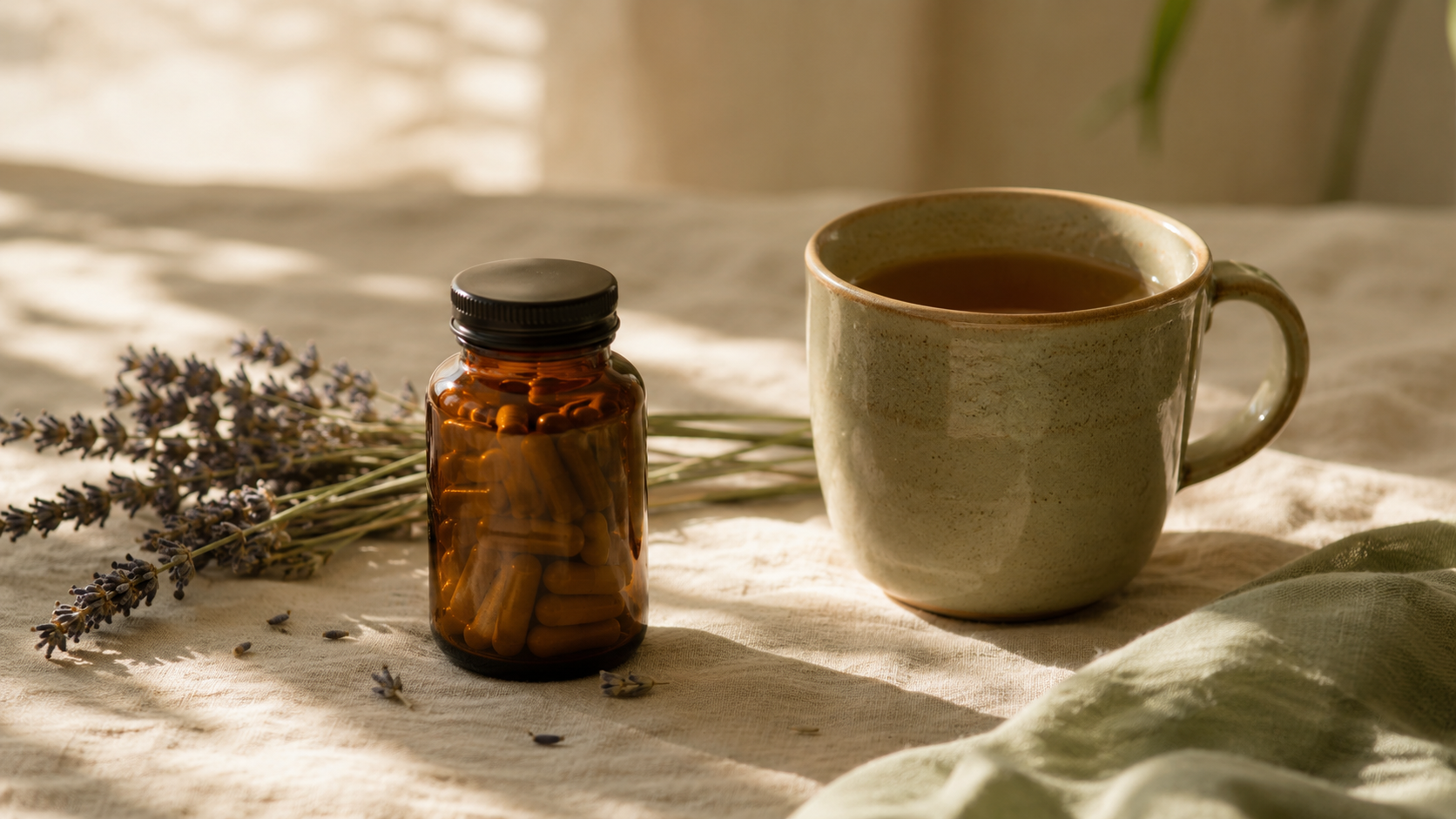
Vitex is genuinely well-researched for PMS, breast tenderness, and cycle irregularity through its effect on prolactin and the pituitary gland. It's included here for completeness, but with an honest caveat: Vitex's active compounds don't extract well into a simple hot-water tea, so most of the research behind it uses standardized capsules or tinctures, not tea. If cycle regularity or PMS is your main goal, a standardized Vitex supplement — not tea — is the form the evidence actually supports.
Bloomin' Well take: If you have PCOS, Vitex needs a closer look before you start it — see our companion PCOS guide for why.
A Simple Herbal Tea Blend to Try
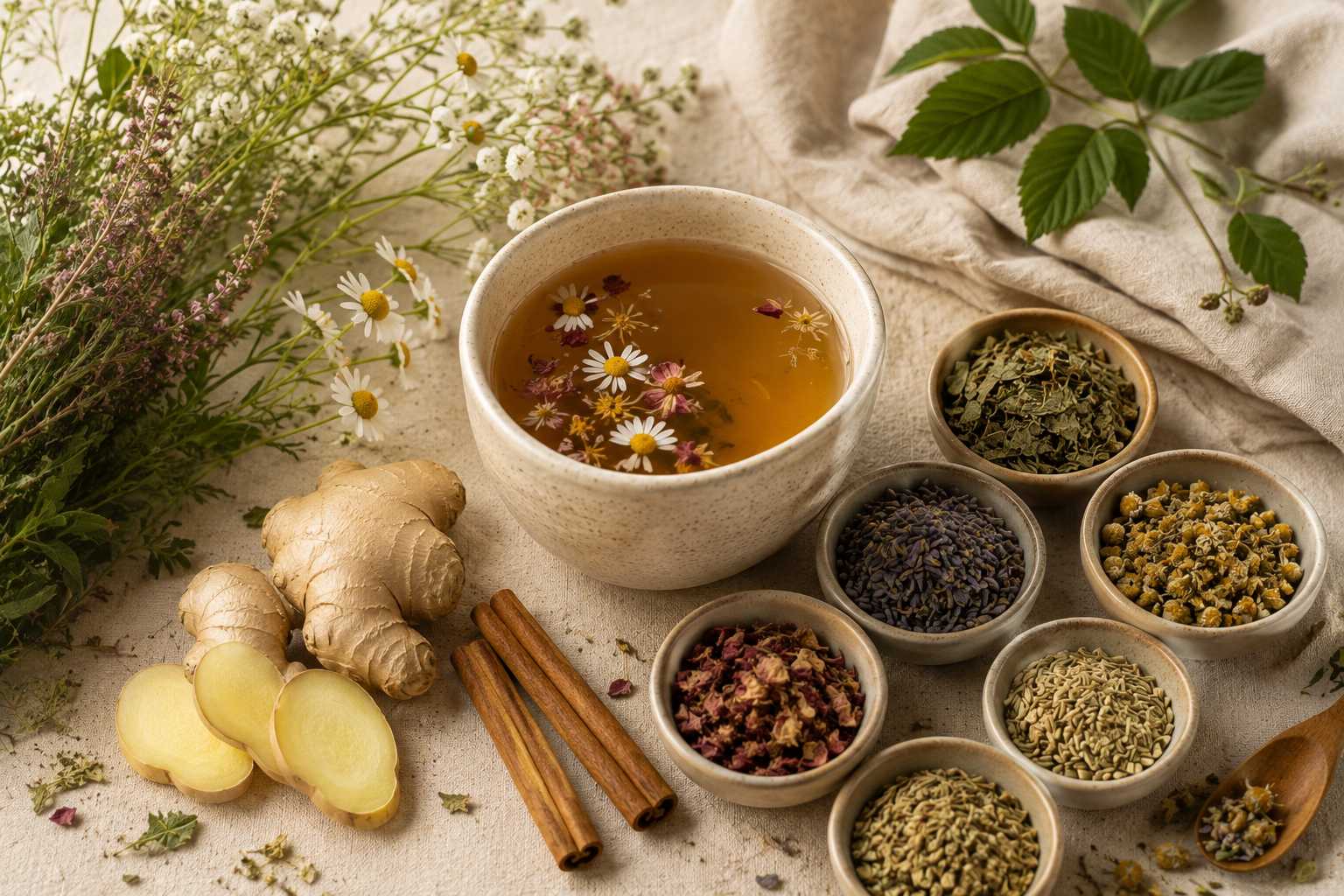
Cramp-Ease Blend: 1 teaspoon fresh ginger, ½ teaspoon crushed fennel seed, a small cinnamon stick. Steep 10 minutes in hot water. Drink starting the day before your period and through the first heavy day. This combines three of the herbs with the strongest human research on this list into one simple daily cup.
What to Look for Before You Buy Tea
Whole or cut herb over "tea dust." The finer and older the plant material, the less potency remains. Whole dried leaves, flowers, or roots you can actually identify by sight hold up better.
A named source, not a vague "women's blend." If a product won't tell you exactly what's in it and in what amount, you can't compare it to any research at all.
Organic when possible, especially for leafy herbs like raspberry leaf and yarrow, since they're grown as whole plants rather than processed extracts.
Steep time and amount that match research doses. A quick dunk of a tea bag is weaker than a proper 10-minute steep with a full teaspoon of herb — strength matters here.
Safety First
Pregnancy: Raspberry leaf, yarrow, shepherd's purse, and fennel (beyond food amounts) are generally not recommended in pregnancy. Ginger and chamomile are more commonly considered fine in normal tea amounts, but check with your provider, especially in early pregnancy.
Blood thinners: Ginger, chamomile, and cinnamon can all mildly affect blood clotting at high or regular doses. Not a reason to avoid them, but worth mentioning to your doctor if you're on a blood thinner.
Heavy or unusual bleeding: Herbal tea is a support tool, not a diagnosis. Heavy bleeding that soaks through a pad or tampon every hour, lasts more than seven days, or comes with dizziness or extreme fatigue needs a doctor's visit, not just a stronger cup of tea.
Allergies: Chamomile and yarrow are both in the ragweed family. Skip them if ragweed, daisies, or marigolds bother your allergies.
Iron and tannins: Raspberry leaf and strong black or green teas contain tannins that can block iron absorption — a real issue if heavy bleeding has already left you low on iron. Separate tea and iron supplements by at least an hour.
Not Sure Where to Start?
Ten herbs is a lot to sort through when you're just trying to make it through your period without curling up on the bathroom floor. If you want help matching your specific symptoms — cramps, heavy flow, irregular cycles — to the right tea and the right dose, that's exactly what an Educational Consultation is for.
Request an Educational Consultation →
FAQ
How long before I know if a tea is actually helping? Give it two to three full cycles. Most clinical trials measured results over one to two cycles minimum, and a single cycle isn't always enough to judge, especially since period symptoms naturally vary month to month.
Can I mix several of these herbs in one cup? Yes, within reason — the Cramp-Ease Blend above combines three. Just avoid stacking multiple bleeding-focused herbs (like yarrow and shepherd's purse together) without a practitioner's input, since their effects can add up.
Is tea strong enough, or do I need capsules? For mild-to-moderate cramps, tea is a reasonable starting point, especially for ginger and fennel, which have real tea-specific research behind them. For heavier symptoms or herbs like Vitex that don't extract well into hot water, capsules or tinctures better match what was actually studied.
Which of these herbs should I avoid completely if I'm pregnant? Raspberry leaf, yarrow, shepherd's purse, and fennel beyond food amounts are the ones to skip or discuss with your provider first. Ginger and chamomile are more commonly considered acceptable in normal tea amounts, but always check with your own provider.
Do any of these interact with birth control? No strong evidence of a direct interaction with hormonal birth control for the herbs on this list, but Vitex specifically works on the same pituitary pathways some hormonal contraception affects, so it's worth a conversation with your prescriber if you're combining the two.
What if none of these are enough for my pain? That's real information, not a failure on your part. Pain that isn't touched by herbal tea, heat, and standard pain relievers is worth a doctor's visit to rule out something like endometriosis or fibroids — see our companion guide on Chinese herbs for period pain for a deeper look at that possibility.
Ginger and fennel have the strongest human research behind them for period cramps, cinnamon and chamomile aren't far behind, and shepherd's purse has the most (if still limited) evidence for heavy bleeding specifically. Raspberry leaf and Vitex are popular "hormone support" herbs, but the honest answer is that raspberry leaf rests mostly on tradition and Vitex works better as a supplement than a tea. None of these ten herbs replace a doctor's visit for bleeding that's genuinely heavy or pain that stops your life — but for the everyday stuff, several of them have real research standing behind that cup.
Want a plan matched to your actual symptoms? Request an Educational Consultation →
References
Moshfeghinia, R. et al. "Ginger for Pain Management in Primary Dysmenorrhea." Journal of Integrative and Complementary Medicine, 2024;30(11):1016-1030.
Chen, C.X. et al. "Efficacy of Oral Ginger (Zingiber officinale) for Dysmenorrhea: A Systematic Review and Meta-Analysis." PMC, Evidence-Based Complementary and Alternative Medicine, 2016.
Vijayamalar, S. et al. "The Effectiveness of Ginger Tea in Reducing Menstrual Pain (Dysmenorrhea) among Adolescent Girls: A Randomized Controlled Trial." European Journal of Medical and Health Research, 2025;3(S1):94-97.
Lee, H.W. et al. "Fennel for Reducing Pain in Primary Dysmenorrhea: A Systematic Review and Meta-Analysis of Randomized Controlled Trials." Nutrients, 2020;12(11):3438.
Swathi, S. et al. "Efficacy of ginger tea and cinnamon tea on primary dysmenorrhea among young adults: A comparative study." Indian Journal of Integrative Medicine, 2024;3(4):107-112.
Soh, Z. et al. "Effects of chamomile and L-theanine beverage on menstrual pain, menstrual symptoms, mood, and sleep quality in young women experiencing primary dysmenorrhea." Journal of Food and Drug Analysis, 2025;33.
"Shepherd's Purse (Bursae pastoris herba) — herbal medicinal product assessment." European Medicines Agency, HMPC.
Healthline / cited 2018 trial: shepherd's purse extract plus mefenamic acid vs. mefenamic acid alone for menstrual bleeding.
"Statement on the potential health effects of raspberry leaf tea in the maternal diet." UK Committee on Toxicity (COT), Food Standards Agency.
Grant, P. "Spearmint herbal tea has significant anti-androgen effects in polycystic ovarian syndrome. A randomized controlled trial." Phytotherapy Research, 2010.
Cochrane Database of Systematic Reviews. "Dietary supplements for dysmenorrhoea." CD002124.
How We Researched This Guide: This article was developed using current human clinical research, systematic reviews and meta-analyses, and established herbal medicine references. Evidence was weighed by strength, sample size, and study quality, and traditional-use claims were labeled as such rather than presented as clinically proven.
This article is for education, not diagnosis or treatment. Talk with a licensed healthcare provider before using any herbal tea regularly, especially if you are pregnant, breastfeeding, on blood thinners or diabetes medication, or experiencing heavy or unusual bleeding.