

By Dr. McKenzy Brewer, DC | Updated November 2026 | 9 minute read
This post has affiliate links. If you buy through them, Bloomin’ Well may earn a small commission at no extra cost to you. We only share products that pass our quality checklist.
You are at a holiday party. The dessert table is full. Everyone is laughing and reaching for something sweet. And you are doing math in your head.
Is there chocolate in that? Is that a citrus glaze? Will I pay for this tomorrow?
Maybe you skip dessert. Maybe you smile and say you are full. Maybe you eat it anyway and spend the next day flushed, itchy, or foggy.
You are not being dramatic. You are taking care of a body that reacts. And you still deserve something sweet.
This guide gives you real options. You will learn which sweets are often easier to tolerate, what we actually know about chocolate and carob, five simple desserts, and a plan for Thanksgiving and Christmas. You should never have to sit at the table with an empty plate.
Quick Answer
Sweets made from fresh fruit, maple syrup, coconut milk, and carob are often easier to tolerate than chocolate, citrus candy, fermented treats, and packaged sweets with dyes or natural flavors. Food lists do not agree, and every body is different. Try one new treat at a time, start with a small bite, and check in with your clinician if symptoms are strong.
In This Post
Why sweets are so hard on a low histamine diet
What sweets can I eat?
Chocolate and carob: what we know
Sweeteners
5 easy low histamine desserts
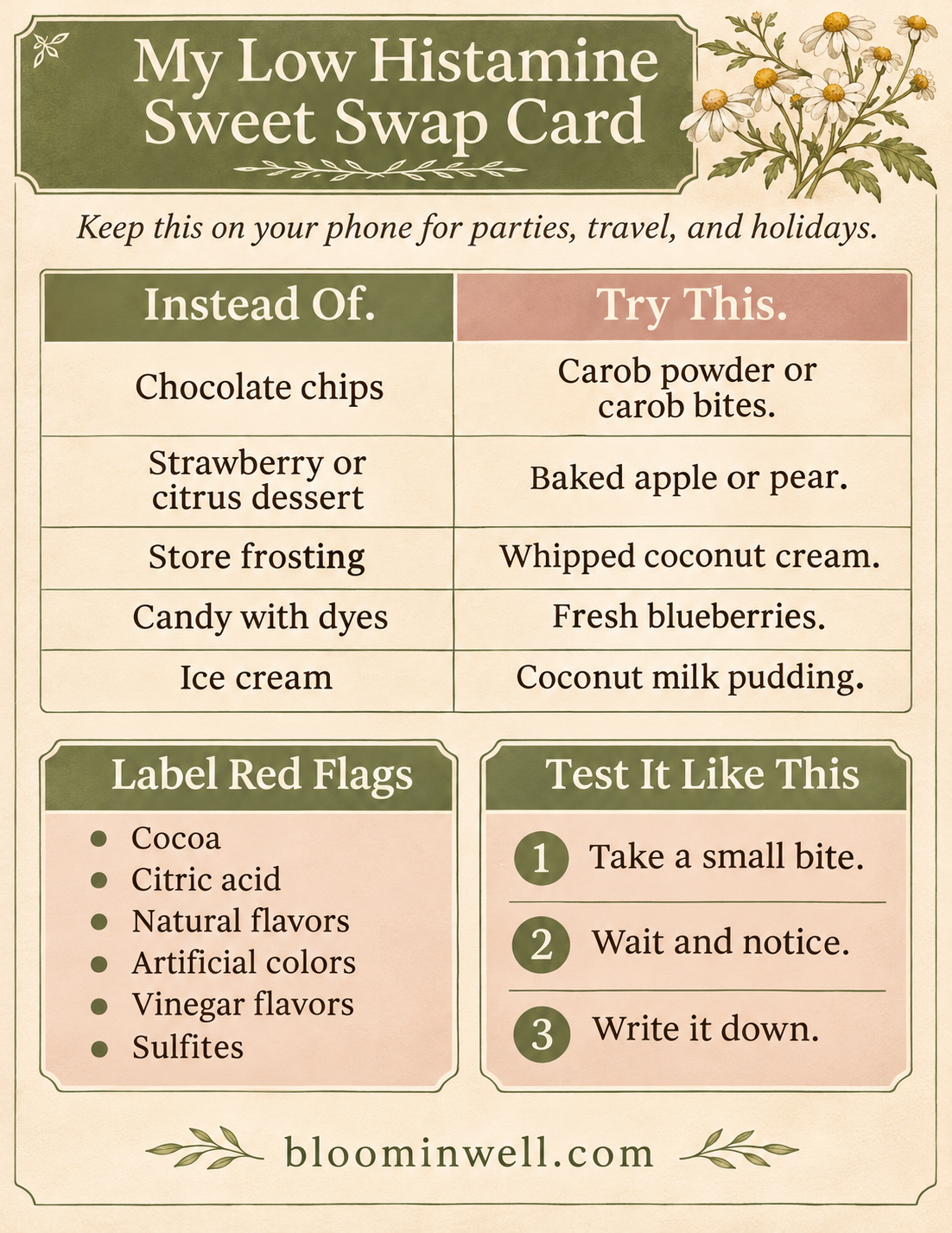
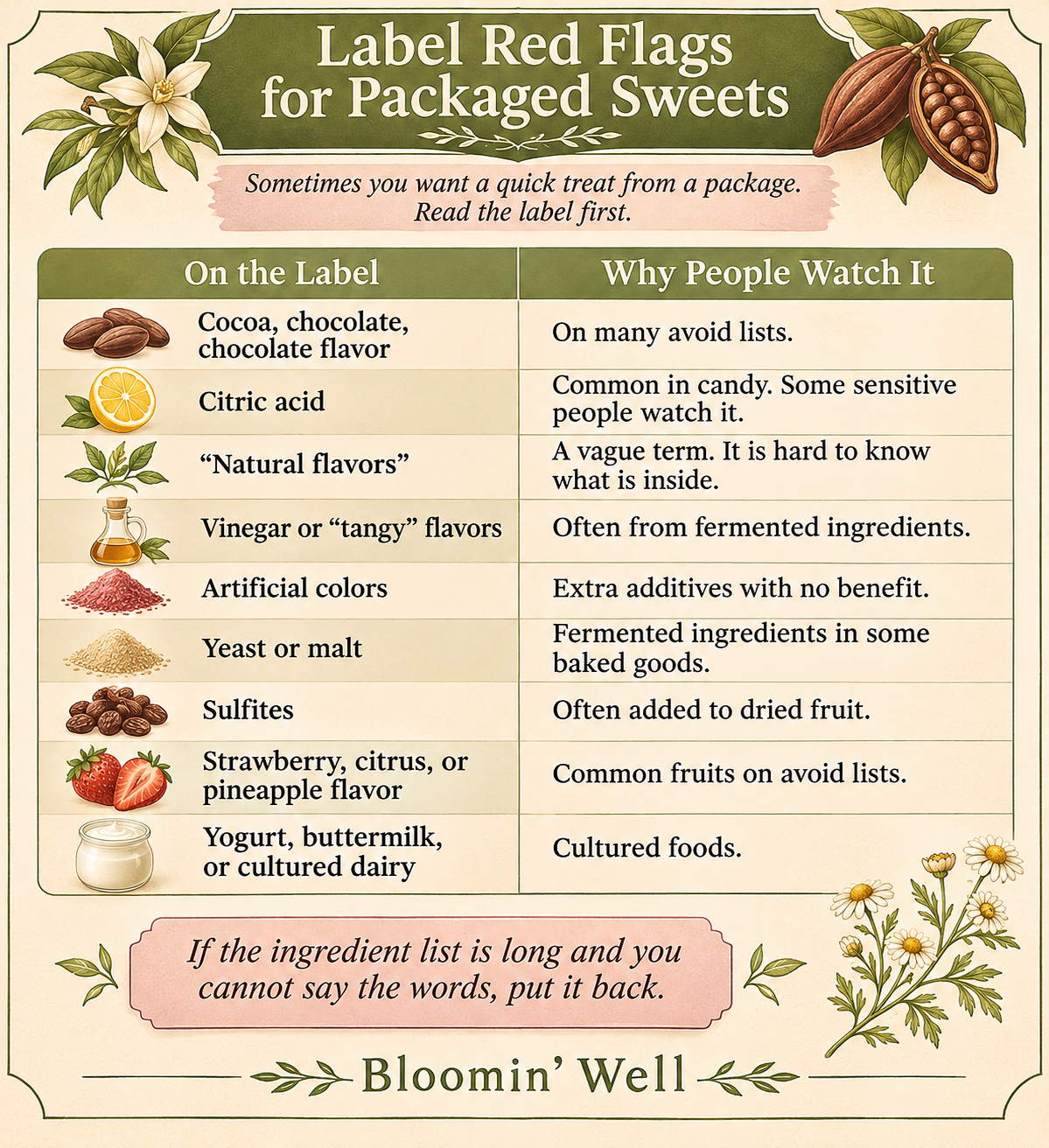
Label red flags
Keep treats fresh
Your holiday dessert plan
Your low histamine sweet kit
FAQ
Why Sweets Are So Hard on a Low Histamine Diet
Dessert is full of hidden trouble spots. Cocoa. Citrus. Vinegar in some candies. Dyes. Natural flavors. Aged dairy. Leftover cake that sat out for hours.
Here is something most blogs will not tell you. Low histamine food lists do not agree. One review looked at 10 published low histamine diets. The lists were very different from each other. Only fermented foods were left out by every single list. Most other foods were left out by half of the diets or fewer.
That does not mean your reactions are not real. It means you are the best expert on your own body. Your job is to test gently and keep notes.
The American Gastroenterological Association says something similar. Its patient page says diet may help some people, but no single diet works for everyone. Its expert update lists low histamine diets as one of several diets that can be tried. It also warns against eating in an overly restrictive way.
What Sweets Can I Eat on a Low Histamine Diet?
Start with simple, fresh ingredients.
Often easier to tolerate:
Peeled apples, pears, blueberries, and ripe peaches
Pure maple syrup
Full fat coconut milk and coconut cream
Cassava flour for baking (get it here)
Arrowroot powder for thickening (get it here)
Carob powder in place of cocoa (get it here)
Coconut oil and a pinch of sea salt (get it here)
Common trouble spots on many lists:
Chocolate and cocoa
Strawberries, citrus, pineapple, kiwi, and papaya
Very ripe bananas
Dried fruit with added sulfites
Candy with dyes or “natural flavors”
Store frosting and boxed mixes
Cultured treats like yogurt desserts
Many diets leave out citrus fruits and bananas. Researchers think the reason may be natural compounds in those fruits that can compete with the enzyme that breaks down histamine. The science is still growing. So treat these lists as a starting point, not a rulebook.
How to test a new sweet:
Take a small bite on a day you feel well.
Wait and notice how you feel. Reactions can sometimes show up hours later.
Write it down. A simple note on your phone is enough.







Chocolate and Carob: What We Know
Chocolate is the sweet most women miss the most. So let us be honest about it.
Many low histamine lists leave out chocolate. Some call it a “histamine liberator.” That means a food that may push the body to release its own histamine. But here is the part you rarely hear. In one review, researchers tested 15 chocolates. They found no measurable histamine. They did find other natural compounds. The same authors also said that no human studies prove that foods release histamine this way. The idea comes from a small number of lab and animal studies.
So why avoid it? Because many women notice they feel better without it. And that is a good enough reason to try a swap.
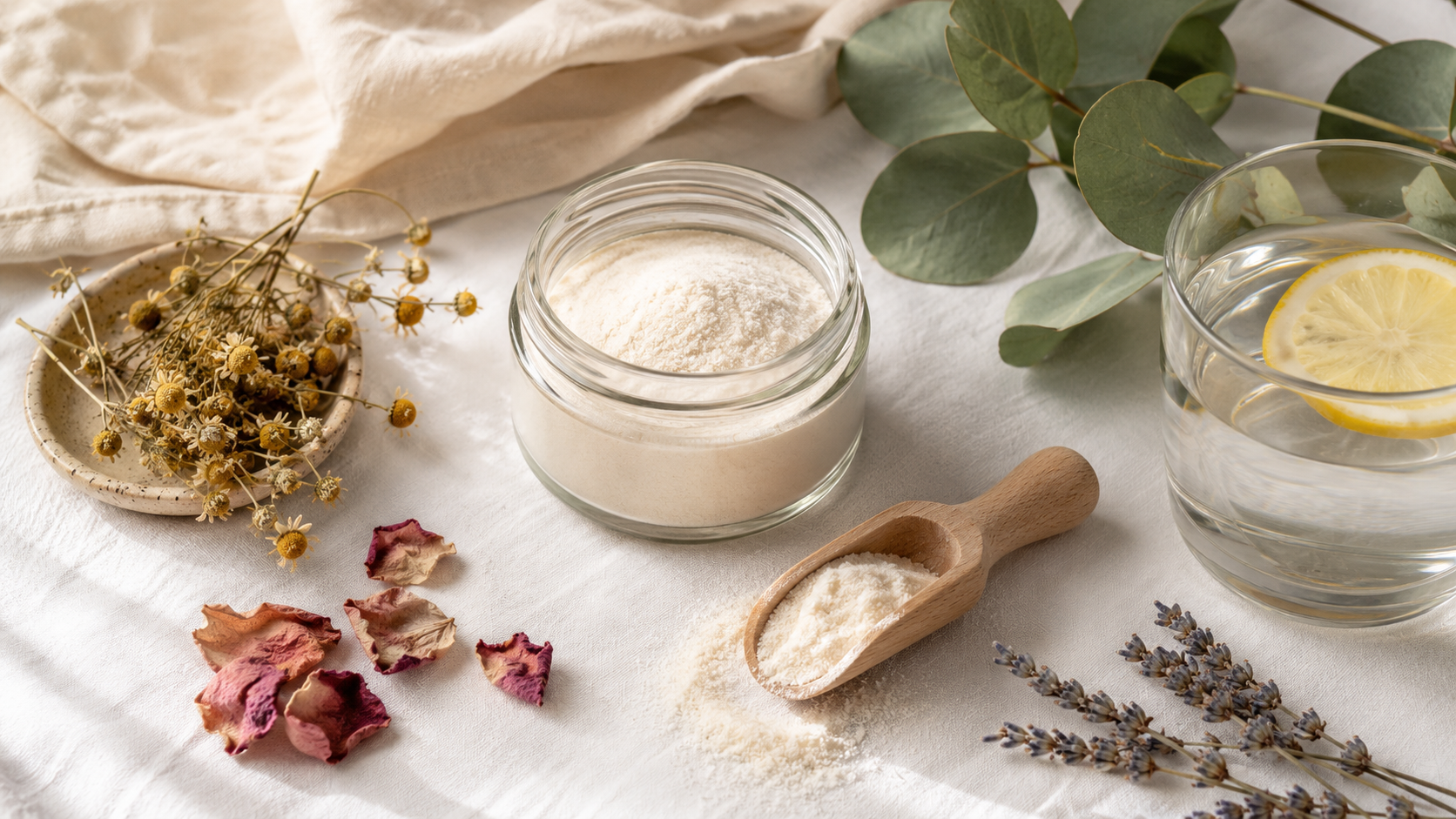
Carob is the most popular swap. It comes from the pods of the carob tree. It tastes sweet and a little like cocoa. It is naturally free of caffeine. Carob has not been studied much for histamine, so think of it as a smart test.
What I look for in carob:
Carob powder with one ingredient
No added sugar
A sealed bag stored in a cool, dry place
If you buy chips, read the label. Some list sugar first and add soy lecithin and palm oils.
I usually start women with carob powder and their own sweetener. You control what goes in.
Sweeteners
Keep it simple.
Pure maple syrup is a favorite. Look for one ingredient on the label. (get it here)
Plain cane sugar is a simple option for baking.
Honey is on the “yes” list for some people and the “go slow” list for others. Try a small amount first. (get it here)
Skip sweeteners with added dyes or “natural flavors.” And keep portions small. A treat should feel like joy, not a sugar crash.



5 Easy Low Histamine Desserts
Try new recipes on a calm day, not in the middle of a flare. Take a small bite first.
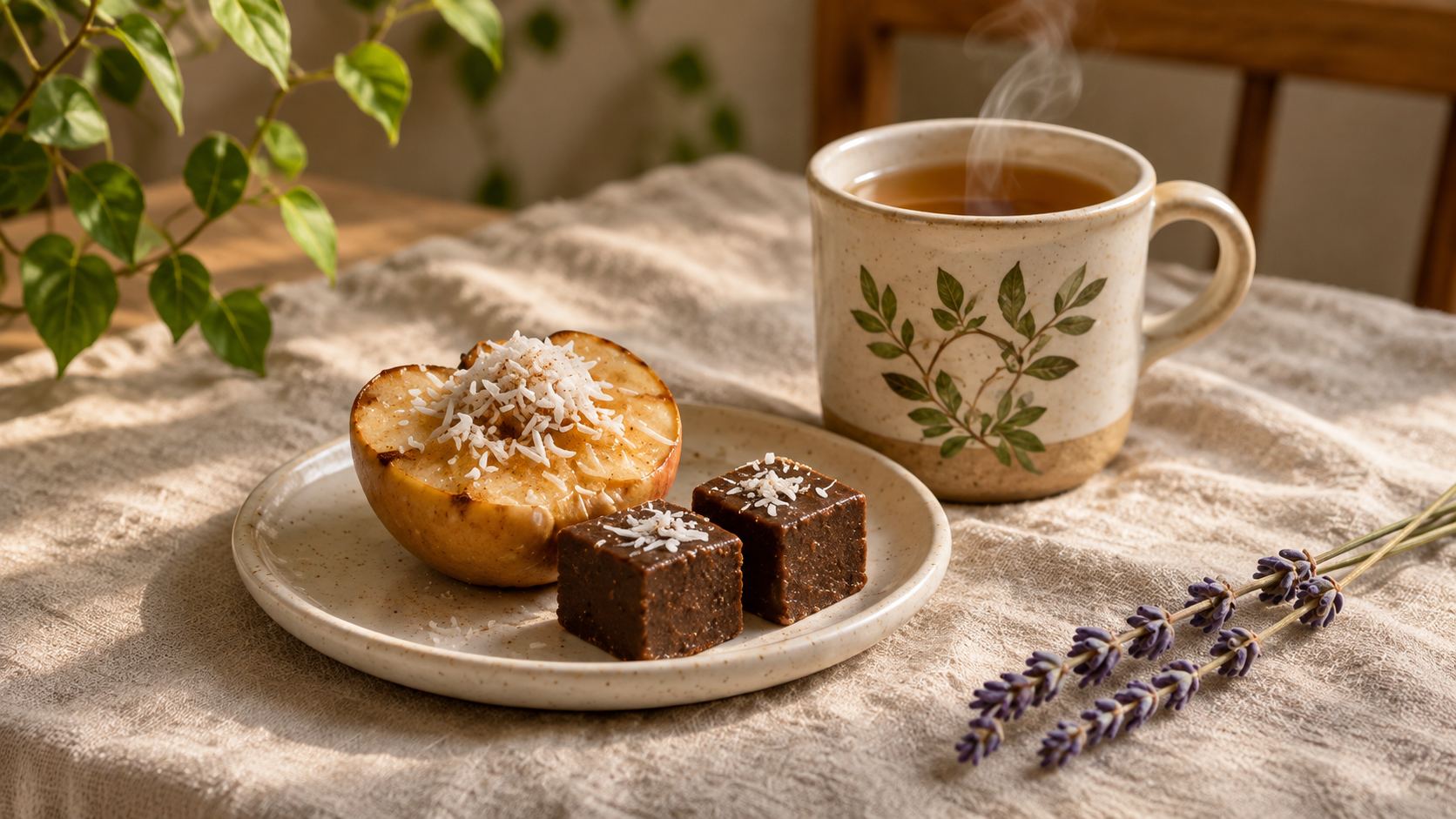
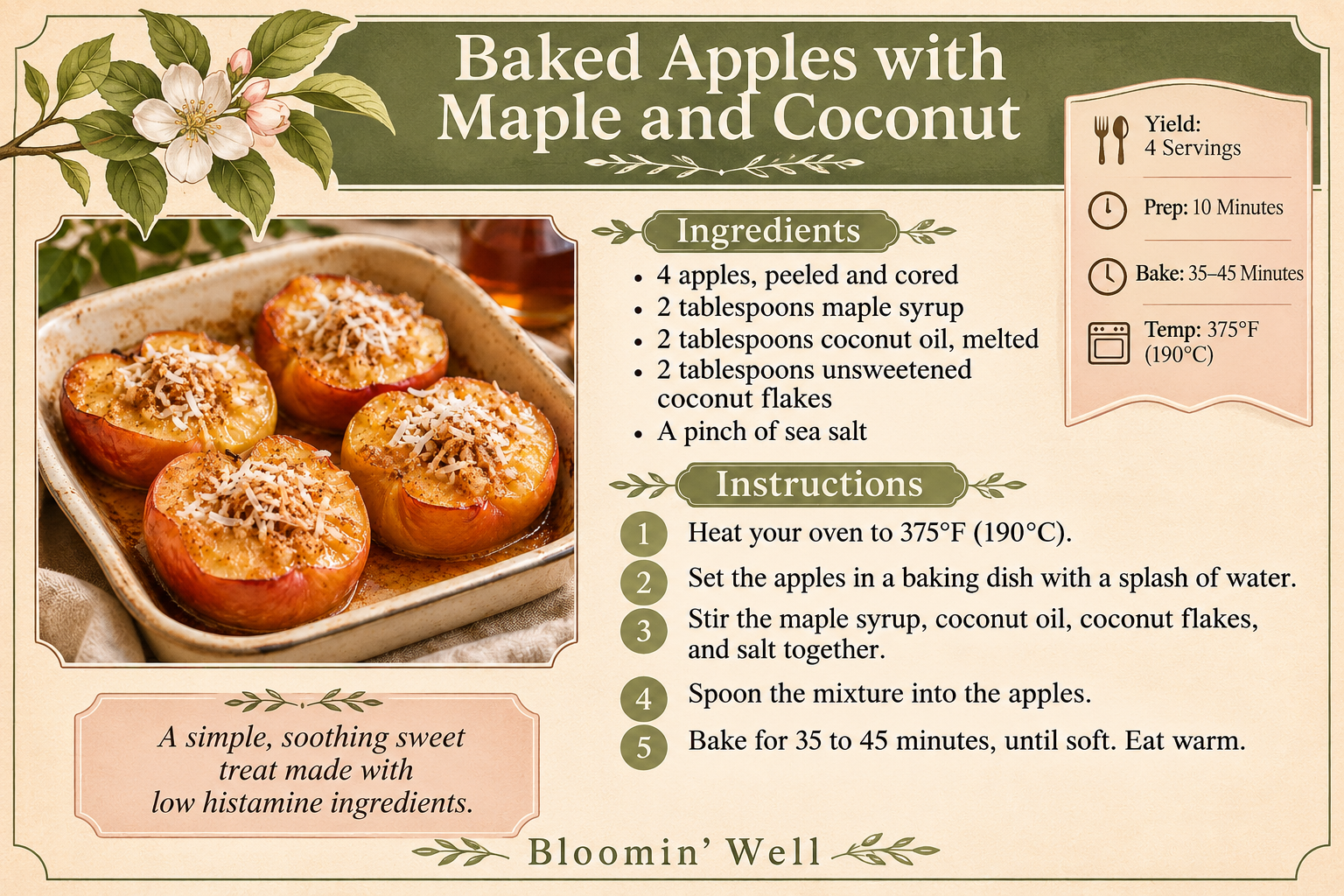
1. Baked Apples With Maple and Coconut
You need:
4 apples, peeled and cored
2 tablespoons maple syrup
2 tablespoons coconut oil, melted
2 tablespoons unsweetened coconut flakes
A pinch of sea salt
How to make it:
Heat your oven to 375 degrees.
Set the apples in a baking dish with a splash of water.
Stir the maple syrup, coconut oil, coconut flakes, and salt together. Spoon it into the apples.
Bake 35 to 45 minutes, until soft. Eat warm.
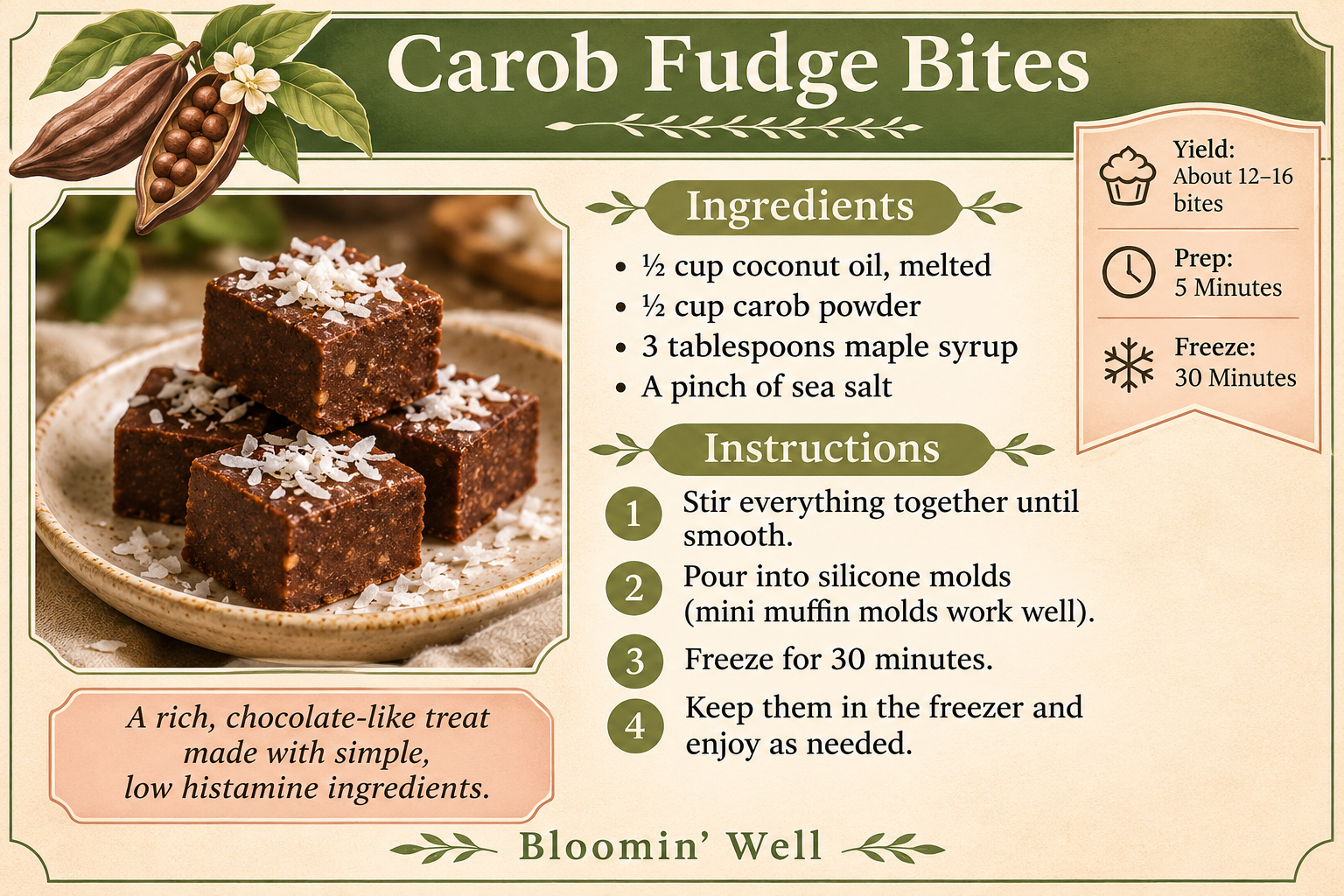
2. Carob Fudge Bites
You need:
1/2 cup coconut oil, melted
1/2 cup carob powder
3 tablespoons maple syrup
A pinch of sea salt
How to make it:
Stir everything together until smooth.
Pour into silicone molds.
Freeze for 30 minutes. Keep them in the freezer.
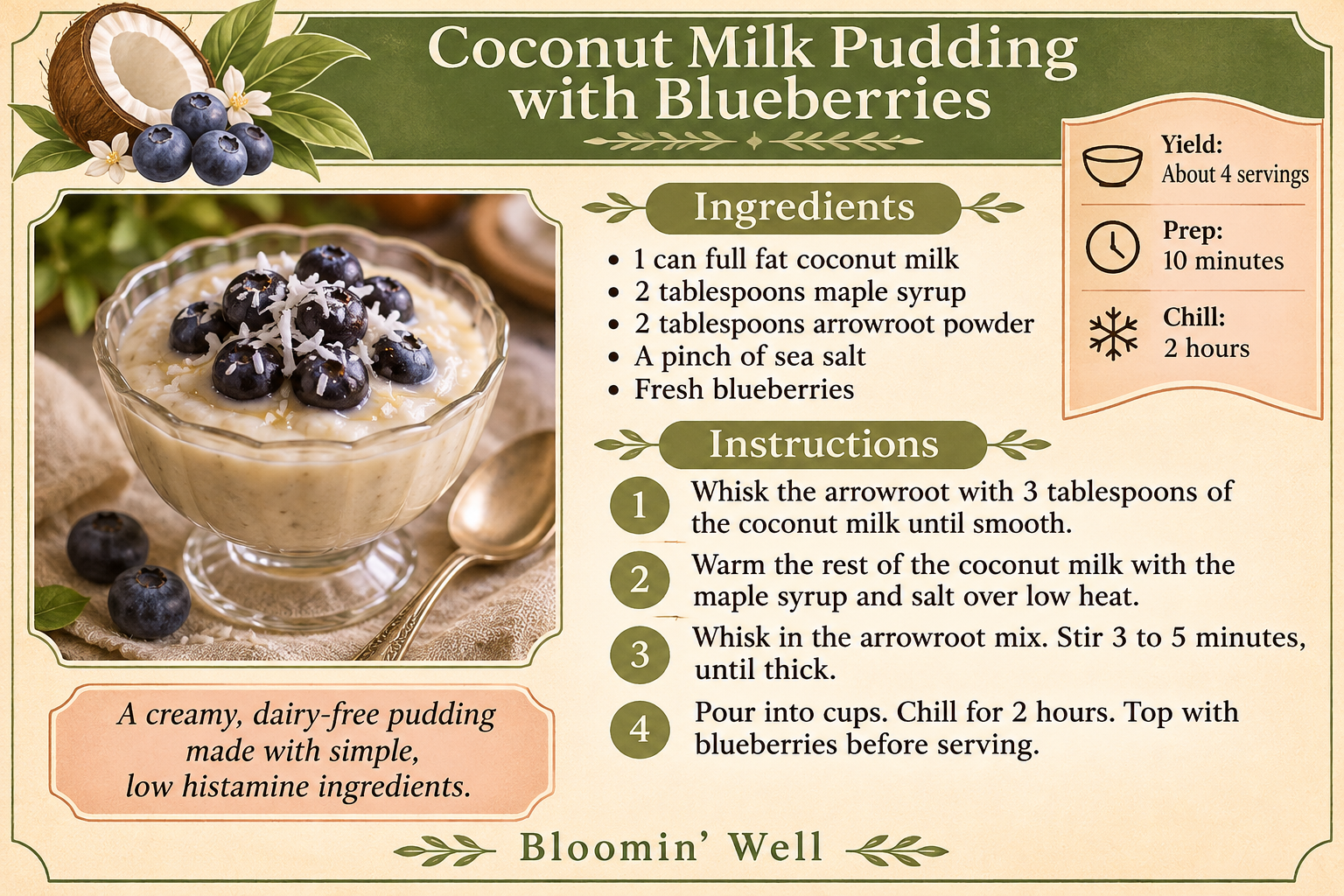
3. Coconut Milk Pudding With Blueberries
You need:
1 can full fat coconut milk
2 tablespoons maple syrup
2 tablespoons arrowroot powder
A pinch of sea salt
Fresh blueberries
How to make it:
Whisk the arrowroot with 3 tablespoons of the coconut milk until smooth.
Warm the rest of the milk with the maple syrup and salt over low heat.
Whisk in the arrowroot mix. Stir 3 to 5 minutes, until thick.
Pour into cups. Chill 2 hours. Top with blueberries.
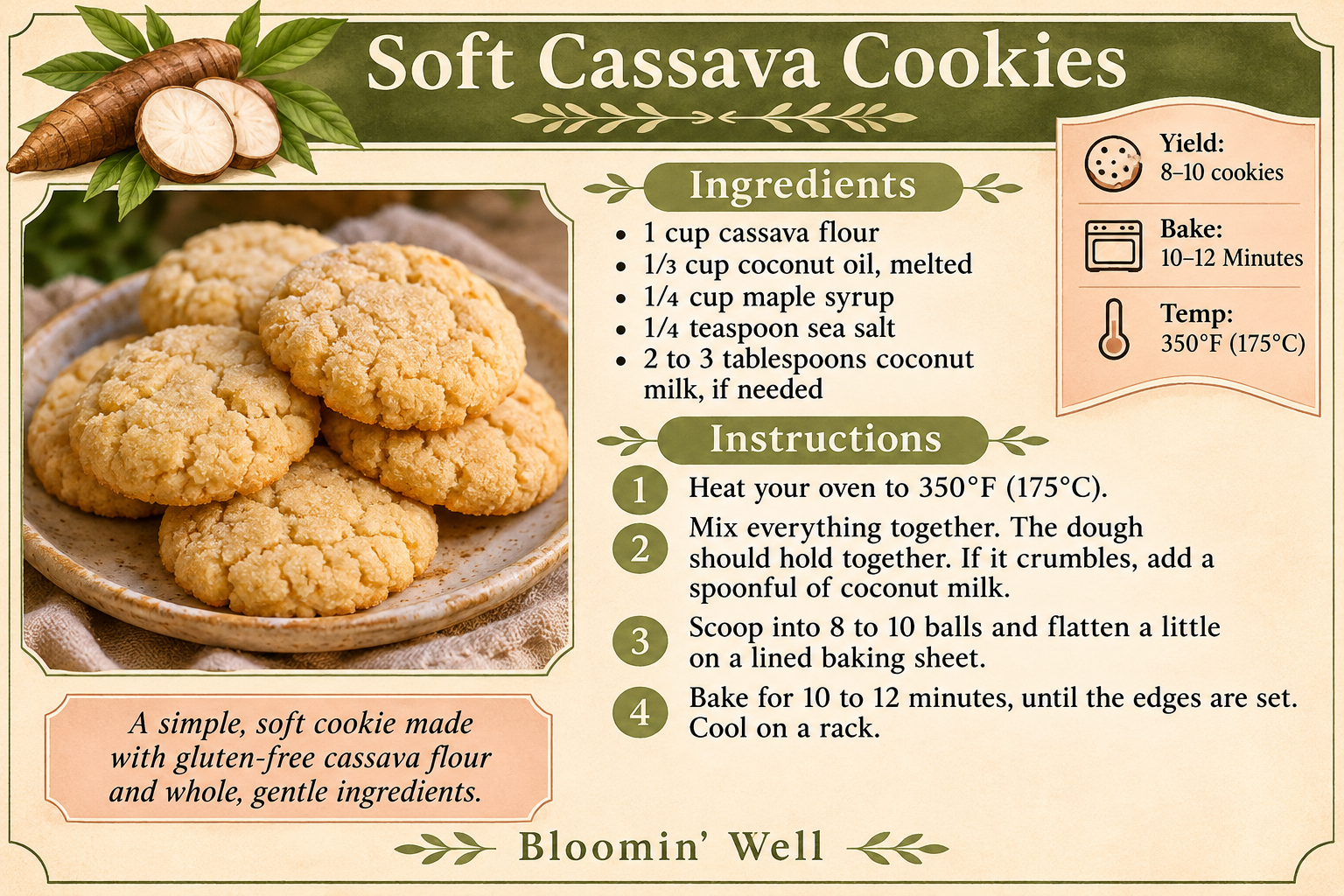
4. Soft Cassava Cookies
You need:
1 cup cassava flour
1/3 cup coconut oil, melted
1/4 cup maple syrup
1/4 teaspoon sea salt
2 to 3 tablespoons coconut milk, if needed
How to make it:
Heat your oven to 350 degrees.
Mix everything. The dough should hold together. If it crumbles, add a spoonful of coconut milk.
Scoop into 8 to 10 balls and flatten a little on a lined pan.
Bake 10 to 12 minutes, until the edges are set. Cool on a rack.
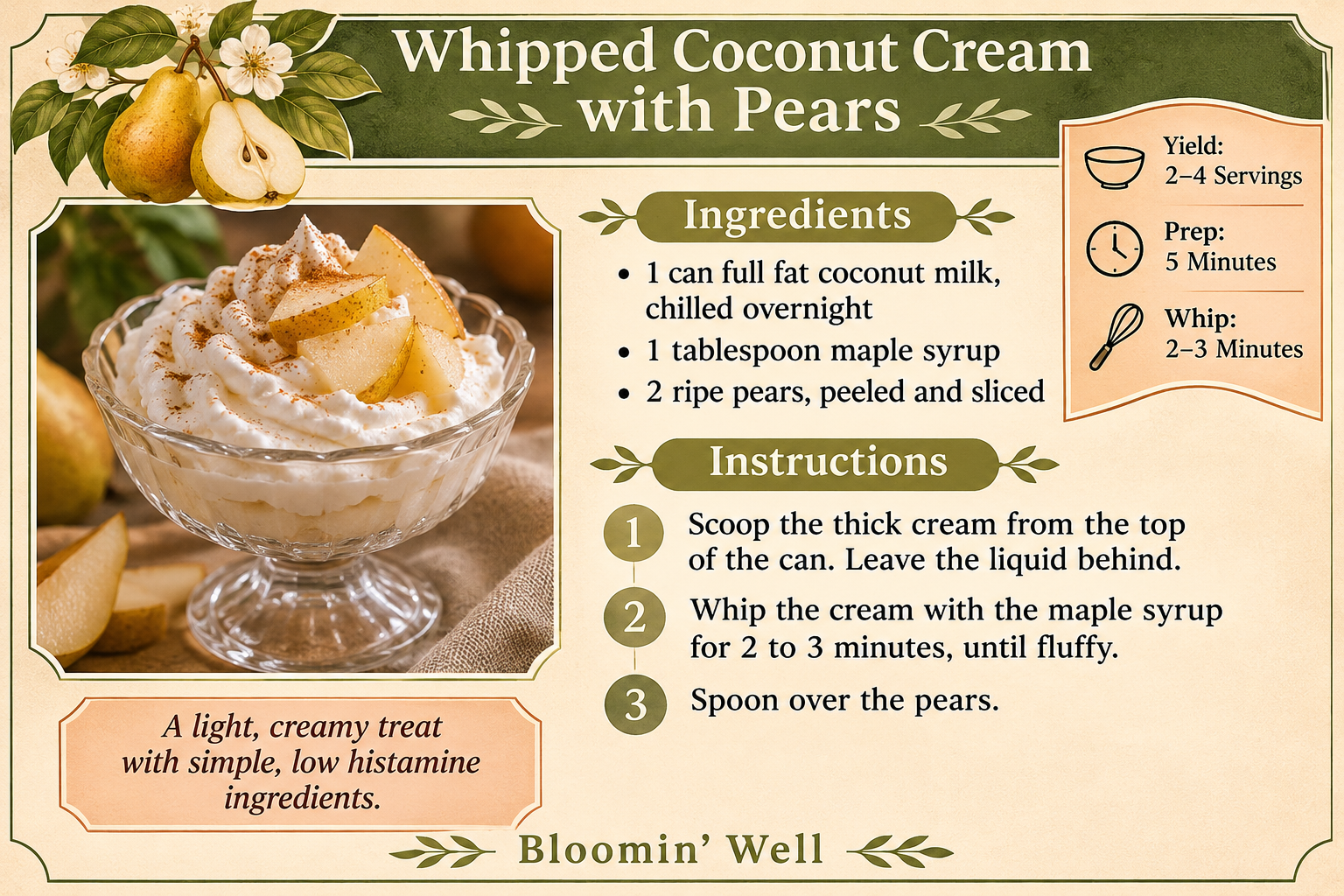
5. Whipped Coconut Cream With Pears
You need:
1 can full fat coconut milk, chilled overnight
1 tablespoon maple syrup
2 ripe pears, peeled and sliced
How to make it:
Scoop the thick cream from the top of the can. Leave the liquid behind.
Whip the cream with the maple syrup for 2 to 3 minutes, until fluffy.
Spoon over the pears.
Keep Treats Fresh
Histamine can build up in food as bacteria work on it. That is why fermented foods and old leftovers are on almost every avoid list. Fresh is your friend.
Bake small batches.
Cool treats fast.
Freeze extras in single portions right away.
Use glass or silicone, not old plastic.
BPA-Free Glass Food Storage Containers here →
Souper Cubes Freezer Trays here →







Your Holiday Dessert Plan
Thanksgiving is on November 26. Christmas is right behind it. Here is a simple plan so you can enjoy both.
Make it ahead. Fudge bites and pudding cups can be ready days before and stored in the freezer.
Pack it. Bring your own dessert in a glass container. Add a small cooler bag if it needs to stay cold.
Plate it. Put your treat on a real plate. It feels like part of the meal, not a consolation prize.
Tell one person. Tell the host or a family member what you are bringing. You do not need to explain more.
Stay steady. Eat a real meal first. Drink water. Go gently.
You are not the difficult guest. You are the prepared one.


Extra Support to Ask Your Clinician About
Some women ask their clinician about a DAO enzyme to take before meals. DAO is the enzyme that breaks down histamine from food. Some research suggests DAO supplements may help some people, but studies are small. DAO does not help with histamine your body makes on its own. Many DAO products are made from pork kidney.
If you want to talk with your clinician about it, these are options on Fullscript:
When to Talk to Your Doctor
This post is for education. It is not medical advice. Please talk with your doctor or dietitian if you have strong or new symptoms, if you take medicine, or if you plan to stay on a limited diet for a long time. Call emergency services right away for swelling of the lips or throat, trouble breathing, or fainting.
FAQ
Is chocolate high in histamine?
Not in the lab tests we found. One review tested 15 chocolates and found no measurable histamine. Chocolate is still on many avoid lists, and many women feel better without it. Reactions vary, so test with care. It is a histimine liberator.
Is carob really low histamine?
Carob is a common swap on low histamine lists. It has not been studied much for histamine, so treat it as a smart test. Read the label on carob chips. Some contain sugar, soy lecithin, and palm oils.
Is honey okay?
Some lists allow it and some say to go slow. Try a small amount and see how you feel.
Can I eat ice cream?
Plain milk had no measurable histamine in one lab review. But many ice creams add cocoa, natural flavors, and gums. A simple coconut milk dessert gives you more control.
Are sprinkles, frosting, and candy safe?
Most contain dyes, citric acid, or natural flavors. Check the label, or make a simple coconut whip instead.
How long do I need to avoid these foods?
Many clinicians use a short trial and then add foods back one at a time. Work with a clinician or dietitian so your diet does not become too limited.
The Bottom Line
You do not have to give up dessert. You can give up the guessing.
Start with fresh fruit, maple syrup, coconut milk, cassava flour, and carob. Test one new treat at a time. Keep your notes. Freeze extras fast. And plan ahead for the holidays so you can sit at the table with a plate you feel good about.
Your body is not asking you to feel left out. It is asking you to be gentle. A sweet life and a calm body can go together.




Shop the Post
Sources
Sánchez-Pérez S, et al. Low-Histamine Diets: Is the Exclusion of Foods Justified by Their Histamine Content? Nutrients. 2021;13(5):1395. https://pmc.ncbi.nlm.nih.gov/articles/PMC8143338/
Aziz Q, Harris LA, Goodman BP, Simrén M, Shin A. AGA Clinical Practice Update on GI Manifestations and Autonomic or Immune Dysfunction in Hypermobile Ehlers-Danlos Syndrome: Expert Review. Clin Gastroenterol Hepatol. 2025;23(8):1291-1302. https://doi.org/10.1016/j.cgh.2025.02.015
American Gastroenterological Association GI Patient Center. hEDS, POTS, and Digestive Symptoms. https://patient.gastro.org/heds-pots-and-digestive-symptoms/
Vlieg-Boerstra BJ, et al. Mastocytosis and Adverse Reactions to Biogenic Amines and Histamine-Releasing Foods: What Is the Evidence? Neth J Med. 2005;63(7):244-249. https://pubmed.ncbi.nlm.nih.gov/16093574/
Maintz L, Novak N. Histamine and Histamine Intolerance. Am J Clin Nutr. 2007;85(5):1185-1196. https://pubmed.ncbi.nlm.nih.gov/17490952/
Comas-Basté O, et al. Histamine Intolerance: The Current State of the Art. Biomolecules. 2020;10(8):1181. https://pmc.ncbi.nlm.nih.gov/articles/PMC7463562/
Mast Cell Action. Diet and MCAS. https://www.mastcellaction.org/diet-and-mcas
Johns Hopkins Children’s Center. Low Histamine Diet handout. https://www.hopkinsmedicine.org/-/media/johns-hopkins-childrens-center/documents/specialties/adolescent-medicine/cfs-low-histamine-diet.pdf
This content is for education only and is not medical advice. Bloomin’ Well may earn a commission from links on this page. See our full disclosure.